|

 Up
Up
 Model L
(You are here.)

  Need
to Need
to
find your
bearings?
Try
these
navigation aids:
If
this is your first
visit, please stop by:
Something
to share?
Please:
|
|
Available in Française, Español, Português, Deutsch, Россию,
中文,
日本, and others.
 he
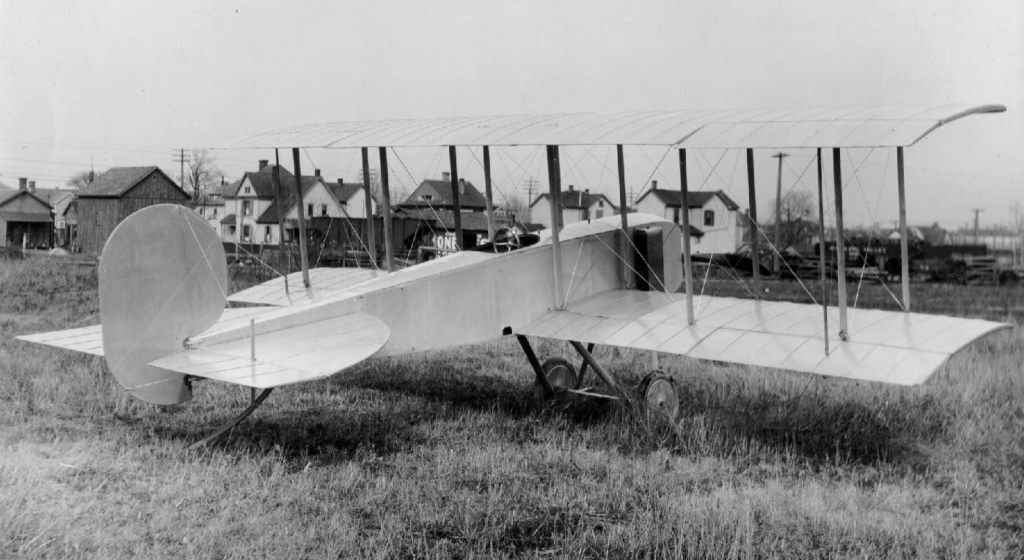
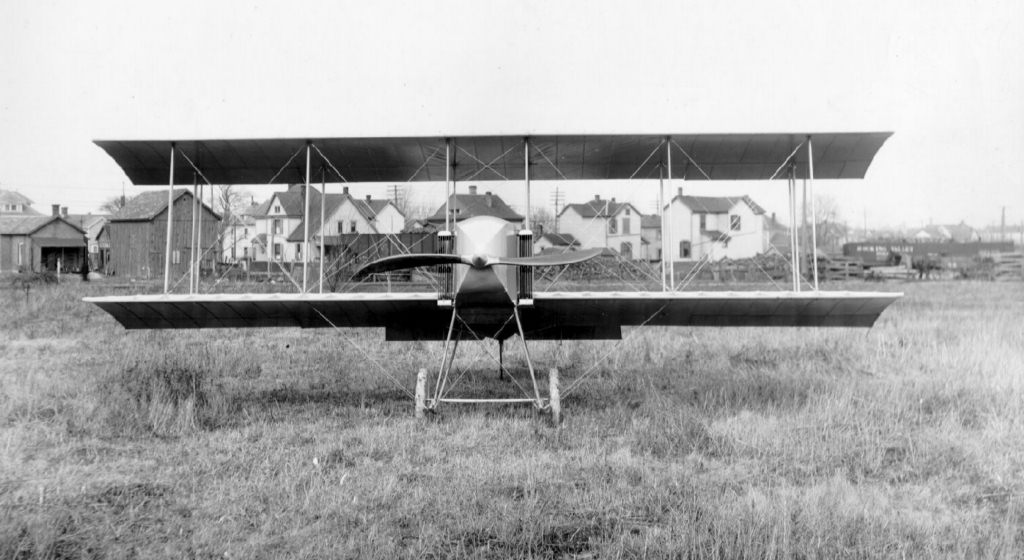
Model L was the first – and only – true "second generation" aircraft
produced by the Wright Company. A single-seat tractor biplane with
standard control surfaces, it was similar in appearance to
many of the biplanes being produced for World War I. It was designed
for high speed military reconnaissance – a light "scout." It could
fly at speeds up to 80 mph (129 kph) and might have achieved higher
speeds if it weren't for the drag created by its oversized tail,
inherited from the Model K. Its modest performance, boxy appearance,
and lack of streamlining made the Wright Model L inferior to many
other biplanes that were being produced at the time. It failed to
secure any military orders and few were produced. he
Model L was the first – and only – true "second generation" aircraft
produced by the Wright Company. A single-seat tractor biplane with
standard control surfaces, it was similar in appearance to
many of the biplanes being produced for World War I. It was designed
for high speed military reconnaissance – a light "scout." It could
fly at speeds up to 80 mph (129 kph) and might have achieved higher
speeds if it weren't for the drag created by its oversized tail,
inherited from the Model K. Its modest performance, boxy appearance,
and lack of streamlining made the Wright Model L inferior to many
other biplanes that were being produced at the time. It failed to
secure any military orders and few were produced.
Wright Model L specifications:
- 29 ft (8.8 m) wingspan
- 6.5 ft (198 cm) chord
- 5.7 ft (174 cm) separation
- 360 sq ft (33.4 sq. m) wing area
- 1:20 camber
- 20
sq ft (1.9 sq m) horizontal rear elevator
- 8.5 sq ft (0.8 sq m) twin movable vertical rear rudders
- 24.2 ft (7.4 m) overall length
- 850 lbs (386 kg) total weight (without pilot)
- 6 cylinder engine, 75 hp running at 1400 to 1560 rpm
- Single direct-drive propeller, 8 ft (244 cm) long
- 25 to 80 mph (40 to 129 kph) speed range
This was the last airplane produced by the Wright Company under
that name. By
this time Orville Wright no longer owned the company, but he was
retained as a consultant and may have had some input on the design
of the Model L.
Although the Model L was a commercial failure, the Wright Company
refocused on the development of high-powered engines for
airplanes and automobiles. In 1916, they acquired the Crane-Simplex
Automobile Company and the Glenn
L. Martin Aircraft Company. All three companies merged to become the Wright-Martin Aircraft Corporation.
|
The Wright Model L was a "second generation" aircraft, characterized
by a tractor (propeller first) configuration, and enclosed fuselage,
and standard control surfaces – rudder, elevator, and ailerons.
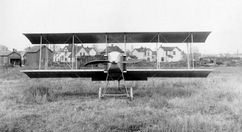
The chain drive and distinctive Wright "bent-end" propellers were
replaced with a single high speed scimitar-shaped propeller mounted
directly to the front of a Wright 6-60 engine.
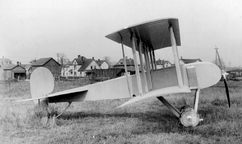
The fuselage, although boxy, was torpedo-shaped, tapering back to
the tail. This shaped had first been suggested by the Wright's
nemesis Alfred Zahm in 1901 and it had since become a standard in
aeronautic design.
|
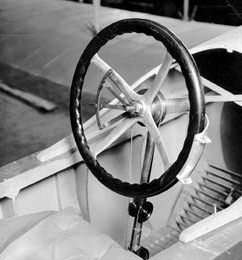
There were no rudder pedals in the Model L. The rudder was
controlled by the light-colored grip on the right side of the yoke.
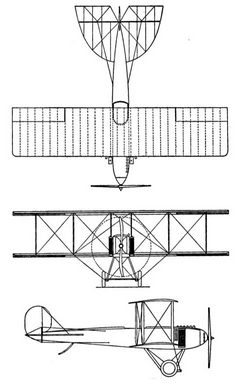
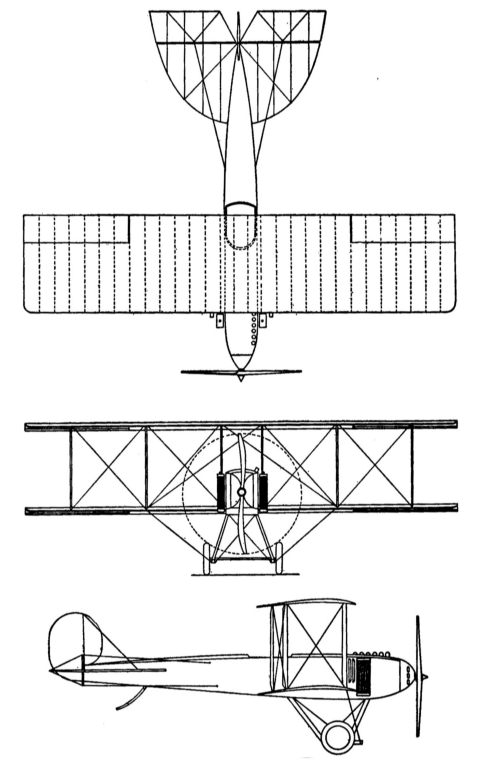
Top, front, and side drawings of the 1916 Wright Model L.
|