|
 Up
Up
 Pilots,
Planes
and Pioneers

(You are here.)
 Down
Down

  Need
to Need
to
find your
bearings?
Try
these
navigation aids:
If
this is your first
visit, please stop by:
Something
to share?
Please:
|
|
Available in Française, Español, Português, Deutsch, Россию,
中文,
日本, and others.
 hile
the Wright brothers may have been the first to make a sustained,
controlled flight, they were just two among hundreds of brave men and
women who helped to give the world its wings during the earliest days of
aviation. Their Flyer was but one of many historically important aircraft. Below are brief
descriptions and photos of some of the most important
people and planes, and where available resources and links where you can find more
information. In some cases, contributors have supplied expanded
histories and biographies. Those are listed at the right and linked below. hile
the Wright brothers may have been the first to make a sustained,
controlled flight, they were just two among hundreds of brave men and
women who helped to give the world its wings during the earliest days of
aviation. Their Flyer was but one of many historically important aircraft. Below are brief
descriptions and photos of some of the most important
people and planes, and where available resources and links where you can find more
information. In some cases, contributors have supplied expanded
histories and biographies. Those are listed at the right and linked below.
A
 B
C
D
E
F
G
H
I
J
K
L
M
B
C
D
E
F
G
H
I
J
K
L
M
N
O
P
Q
R
S
T
U
V
W
X
Y
Z
|
|
 |
|
|
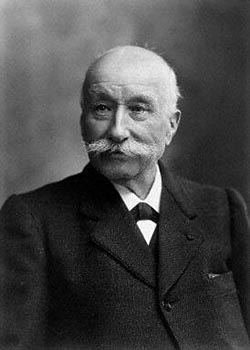
Clement
Ader of France was a distinguished electrical engineer who helped
pioneer the telephone. He also studied birds and bats, and in 1873 built a bird-shaped glider with feathered wings.
He made a few
tethered accents, then began thinking about powered flight. In 1882, he
began work on an airplane and a lightweight steam engine to power it. He
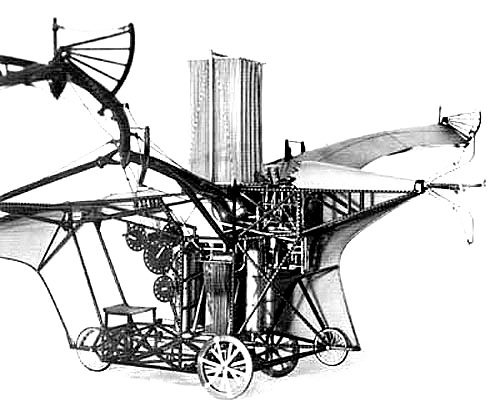
called his craft the Eole. It had a 20-horsepower engine,
bat-like wings, no rudder, and no elevator. When tested in
1890, the 653-pound (296-kilogram) craft flew about 165 feet (50
meters) at a height of 8
inches (20 centimeters) off the ground. It was the first aircraft to take off from level
ground under its own power. In 1892, Ader convinced the French
Ministry of War to fund further research. He built a twin-engine craft
called the Avion III, and attempted to fly it before official observers in
1897. It failed to impress those observers, and they cut off
funding. Later, after Alberto Santos-Dumont had made a short flight in
France, Ader began to claim that his craft had flown almost 1000 feet (304
meters) in
1897. The official report, released many years after the test, says
nothing of the kind. It records that the Avion III never completely left the
ground, although one or two of its three wheels may have come off.
See also:
Airmen
& Chauffeurs. |

Clement Ader
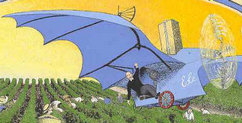
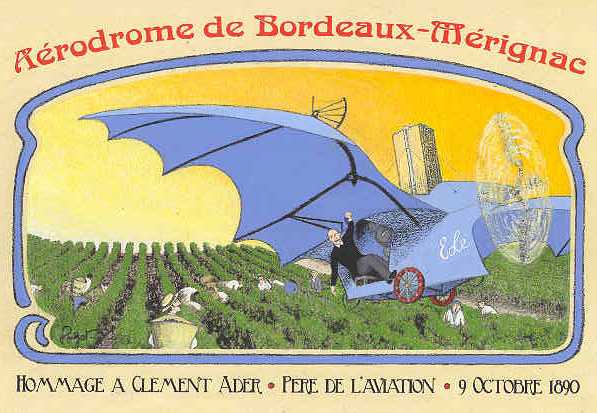
An artist's conception of the Eole
in flight. The actual "flight" was just inches above the ground.
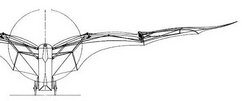
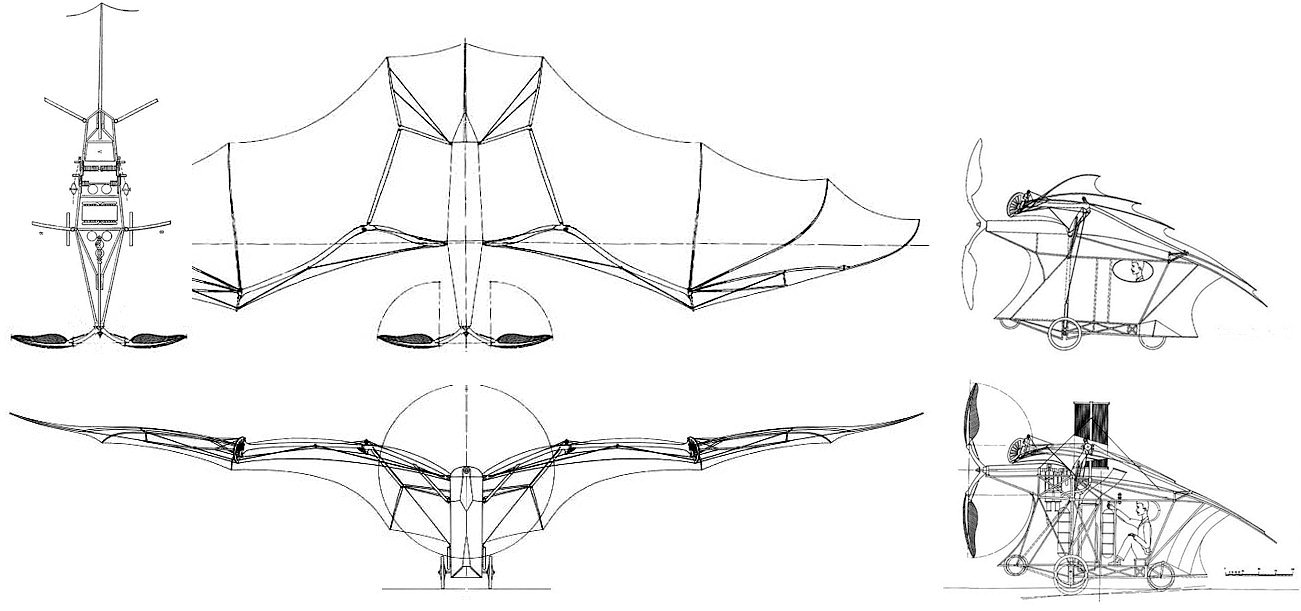
Plans for the Eole.
|

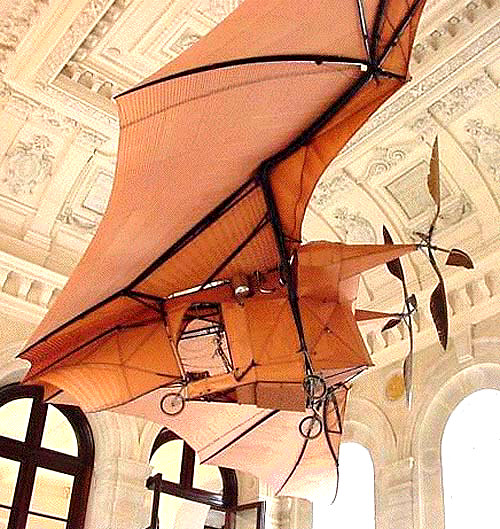
The Avion III, on display in
Paris, France.
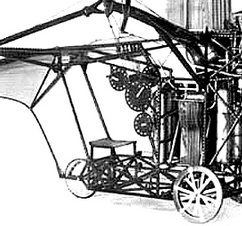
An uncovered model of the Eole,
showing the bat-like frame of the aircraft.
|
 |
|
"Aerodrome A" was a manned
aircraft commissioned by the U.S. Army in 1898. Originally, it was
intended to be used in America's war with Spain, but the
Spanish-American War was over by the time the U.S. War Department's Board of
Ordinance awarded the Smithsonian Institution $50,000 to build a
man-carrying airplane. It was hoped that it might be useful in
future wars or in defense.
Samuel P. Langley,
then Secretary of the Smithsonian, headed the project. The aircraft,
also known as the Great Aerodrome, was based on the designs of
smaller tandem-wing powered "aerodromes" that Langley has flown
successfully beginning in 1896. Originally, it was planned to
test-fly the Aerodrome in 1901, but problems – especially with the
motor – delayed the test until 1903. Langley also built a
quarter-scale version of the Aerodrome to test the soundness of the
design. He tried and failed to fly the model in 1901, but it
eventually achieved a successful flight in August 1903, making it
the first gasoline-powered aircraft ever to fly, albeit unmanned. The full-scale
Aerodrome was ready for testing in October of that year. It was a
massive aircraft for its day, with a wingspan of 48 feet (14.8
meters) and a length of 52 feet (16 meters). It weighed 750 pounds
(340 kilograms), and had a remarkable five-cylinder radial engine
producing up to 52 horsepower. The Aerodrome was to be piloted by
Charles
Manly, who also headed the construction team and built the engine.
It had no roll control, but it was pitched up and down by a pivoting
tail and yawed right and left by a "steering rudder" amidships.
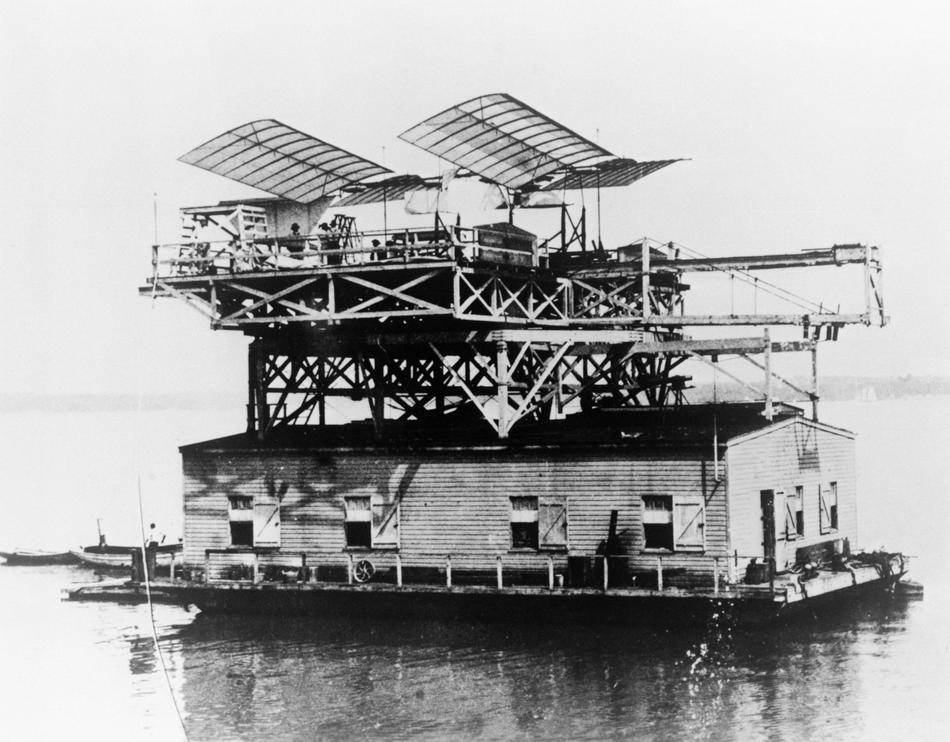
It was intended to be launched by a catapult from the roof of a
large houseboat, which doubled as a workshop and storage shed.
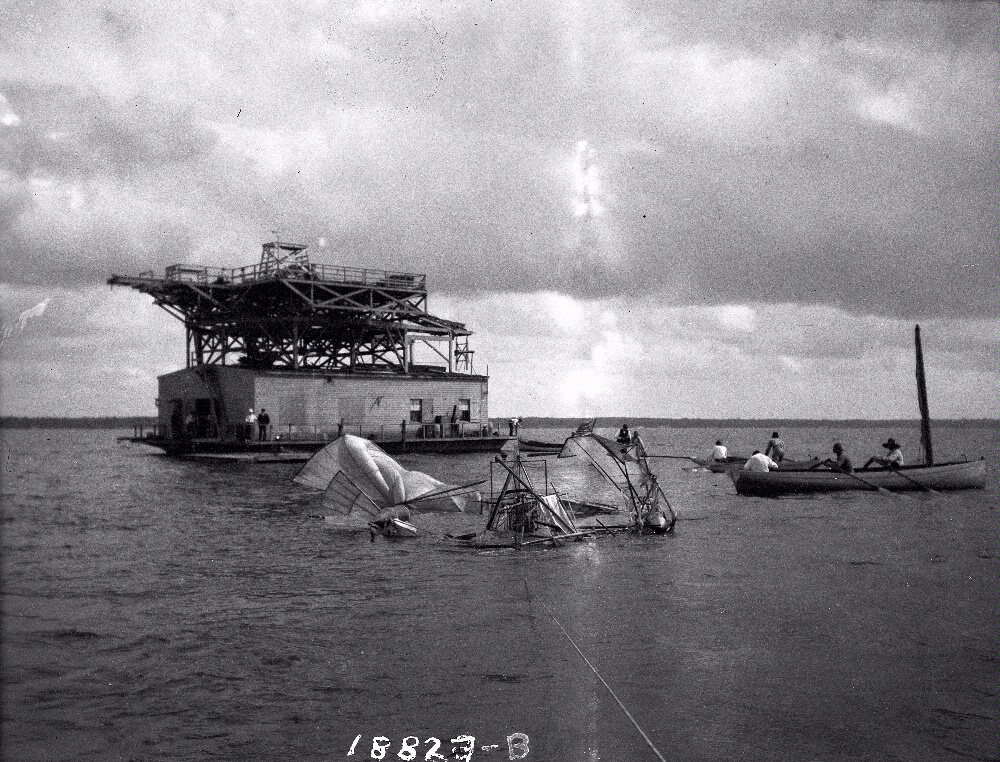
Langley tried twice to fly the Aerodrome, on 7 October and 8
December 1903. It failed both times, dropping into the Potomac River
just south of Washington DC. Langley maintained that the Aerodrome
could have flown but was snagged by the catapult on both attempts.
Langley died in 1906. The Aerodrome remained in storage until 1914
when Charles D. Walcott, then Secretary of the Smithsonian, sent the
remains to Glenn Curtiss in Hammondsport, NY for further tests.
Curtiss made significant changes to the airframe, wings, engine, and
controls, then managed several hop-flights on 28 May, 2 June, and 5 June
1914. Further changes, including a more powerful motor and modern
propeller, eventually enabled the Aerodrome to fly for 20
miles. Curtiss and the Smithsonian claimed that these flights proved
the Aerodrome was airworthy in 1903 and could have flown before the
Wright brothers. It was restored to its original configuration and
displayed at the Smithsonian in 1918 with a plaque that identified
it as the the first powered airplane "capable of sustained flight."
This angered Orville Wright who asked the Smithsonian to admit they
made significant changes to the aircraft and retract their claims.
When they declined to do so, he sent the 1903 Wright Flyer to the
Science Museum in Kensington, England in 1928 in protest. The
Smithsonian eventually recanted, and the Flyer was returned to
America in 1948. The Langley Aerodrome is now on display at the
Smithsonian's Udvar-Hazy Center in Chantilly, VA. For an
expanded history of the Aerodrome A and its test flights,
see
The Wright/Smithsonian Controversy.
|

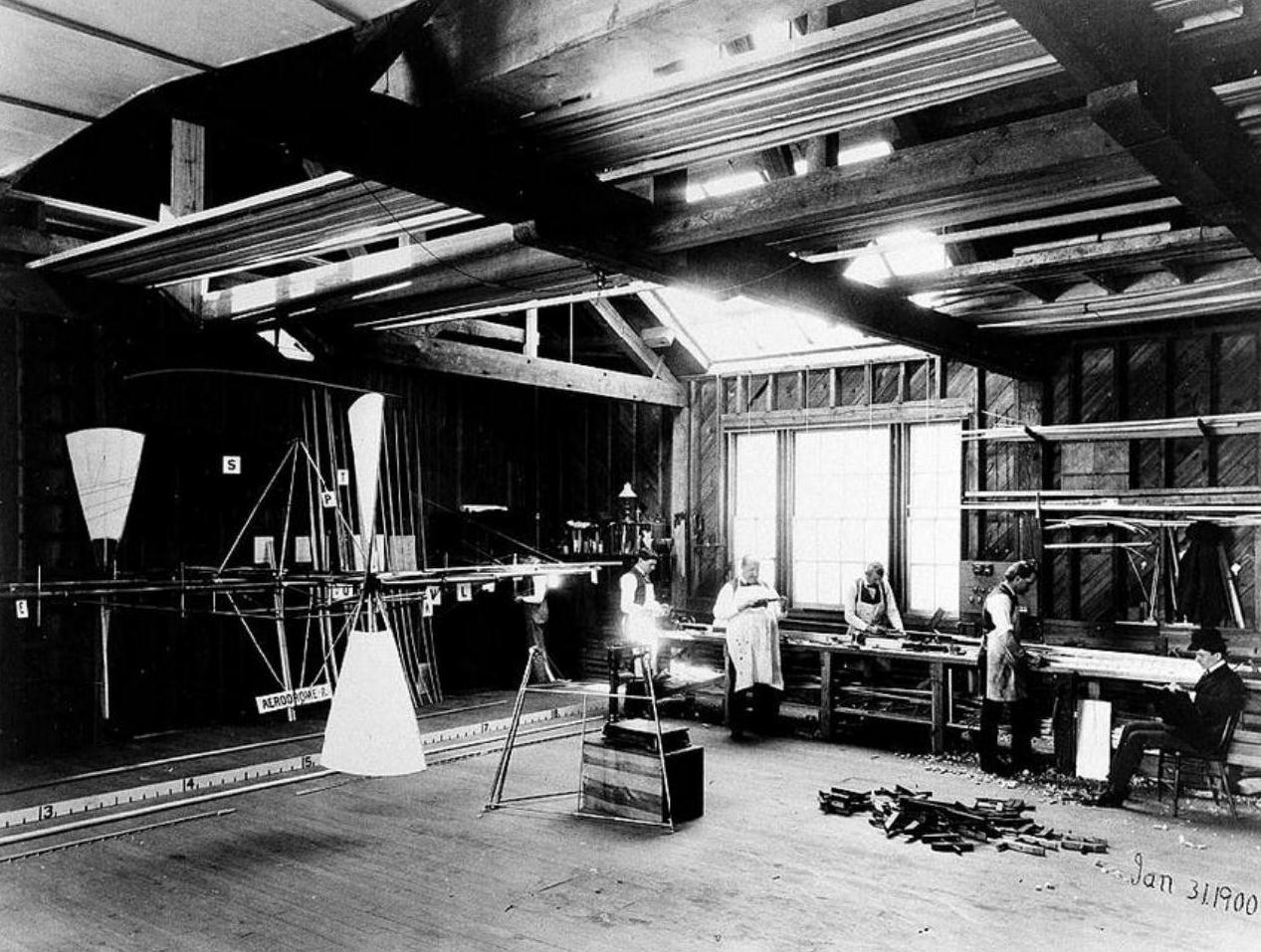
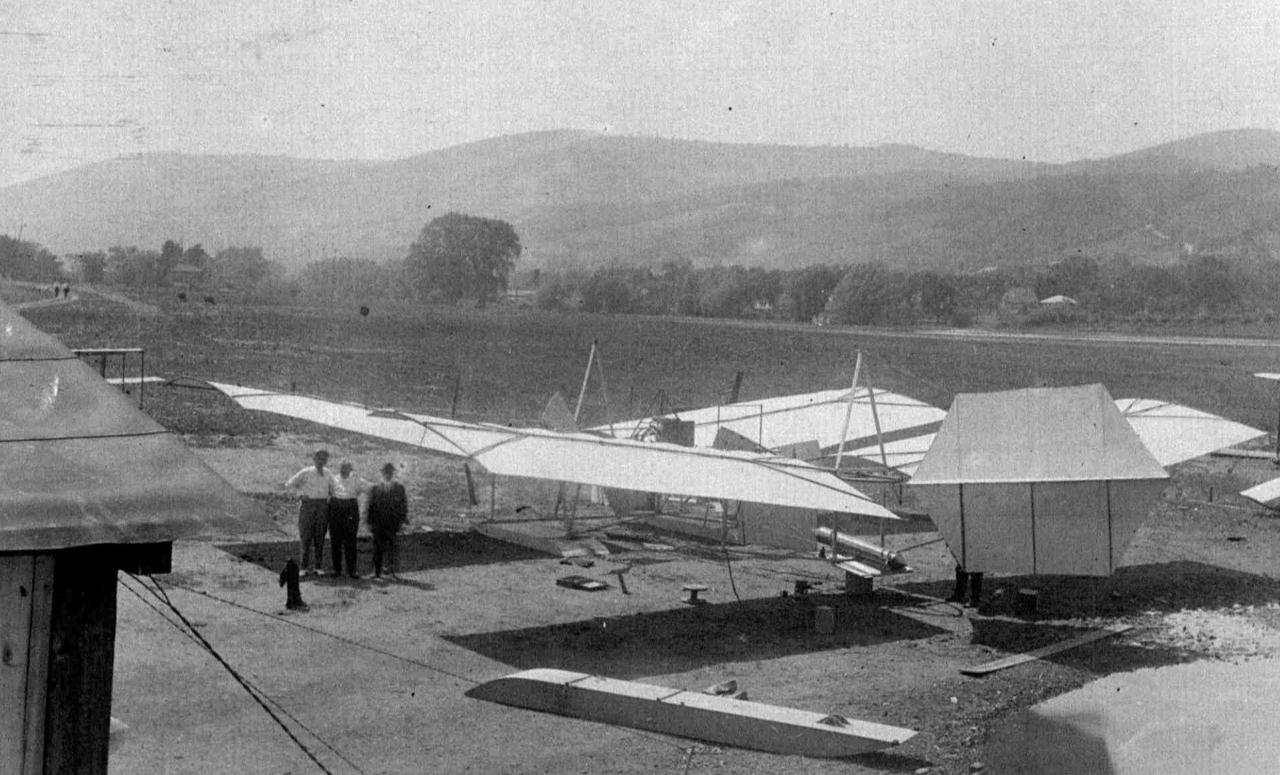
The Aerodrome was built in Langley's workshop in the "South Shed"
annex to the Smithsonian.
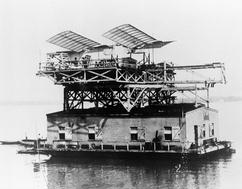
The Aerodrome was launched from a houseboat floating on the Potomac
River, south of Washington DC.

The first launch attempt on 7 October 1903. The aircraft simply slid
into the water.
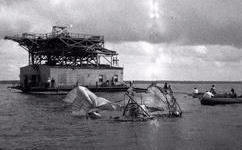
The Aerodrome in the Potomac River after the 7 October 1903 launch
attempt.

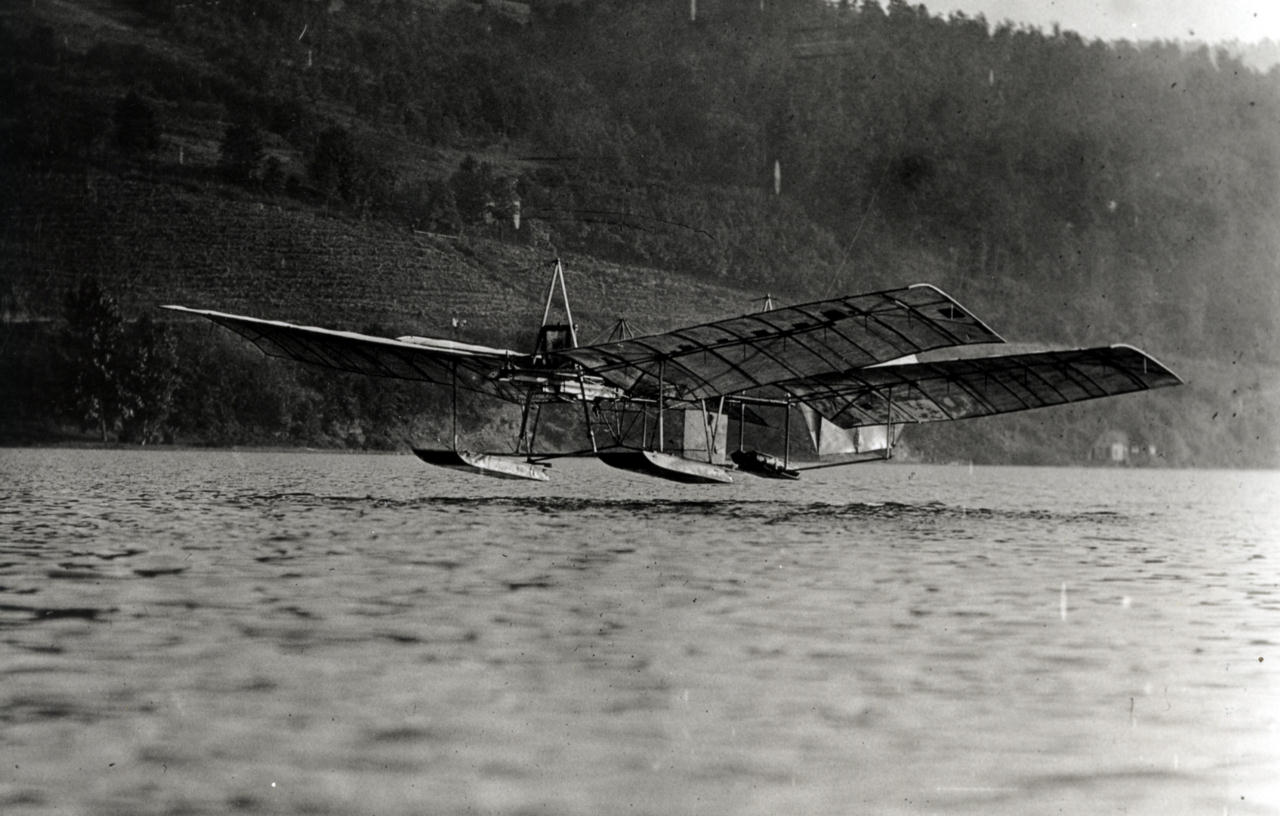
The Aerodrome in flight over Lake Keuka near Hammondsport in
September
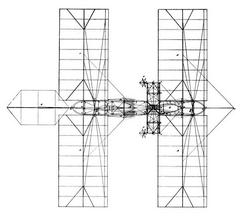
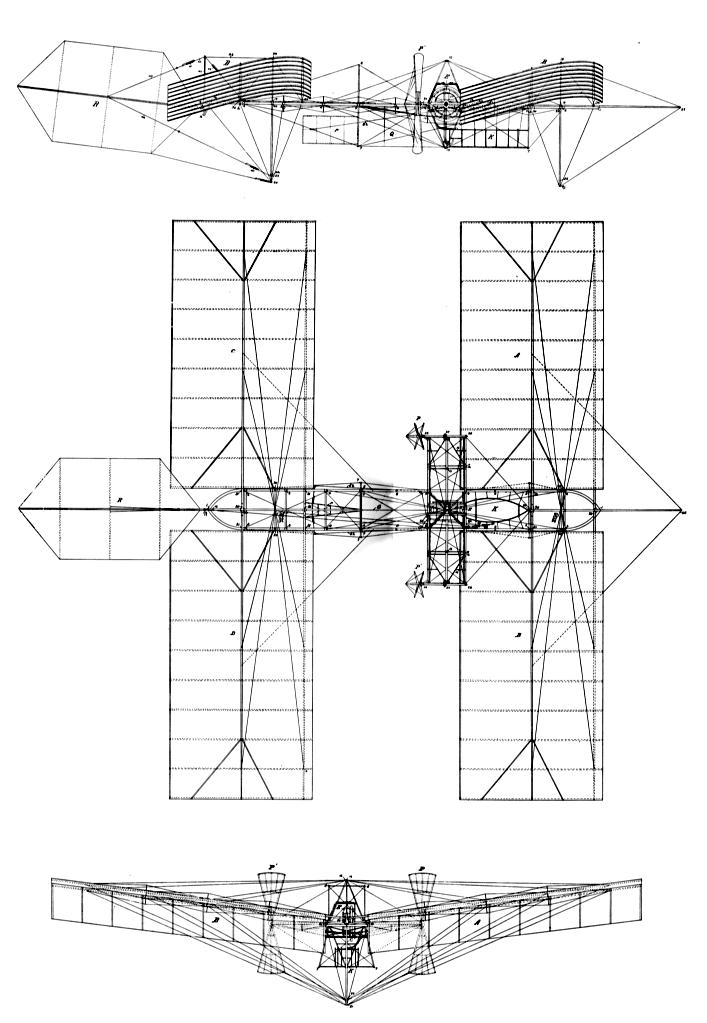
A three view of the Langley
Aerodrome A.
|
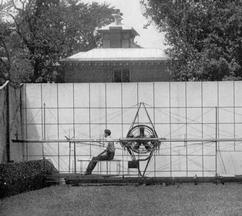
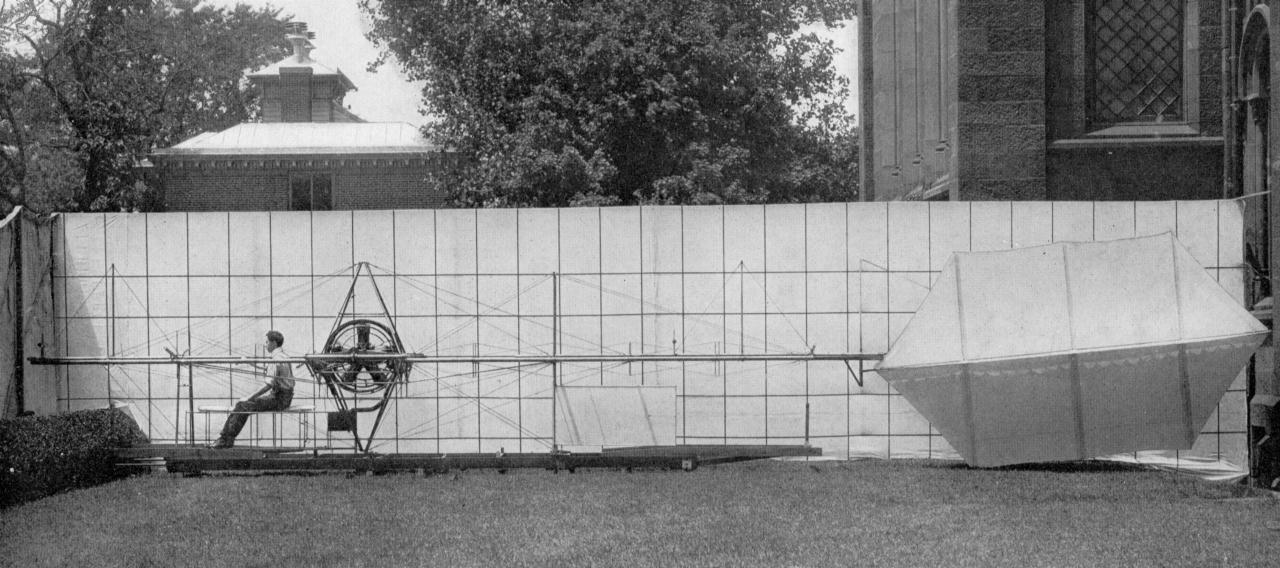
The airframe of the Aerodrome, showing the cockpit, engine, and
tail. By shifting his weight along the bench, the pilot could adjust
the aircraft's center of gravity.
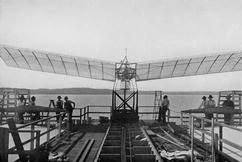
The Aerodrome in place on its catapult. Giant springs shot the
aircraft forward, then released it over the water.
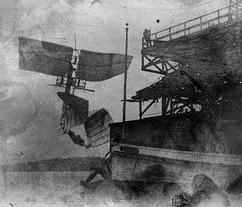
The second launch attempt on 8 December 1903. This time the back
wings collapsed.
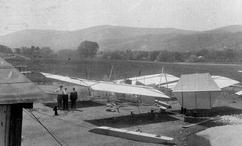
The Aerodrome being fitted for pontoons at the Curtiss Aeroplane and
Motor Company in 1914. Curtiss did away with the catapult and
launched the Aerodrome from the water like a seaplane.

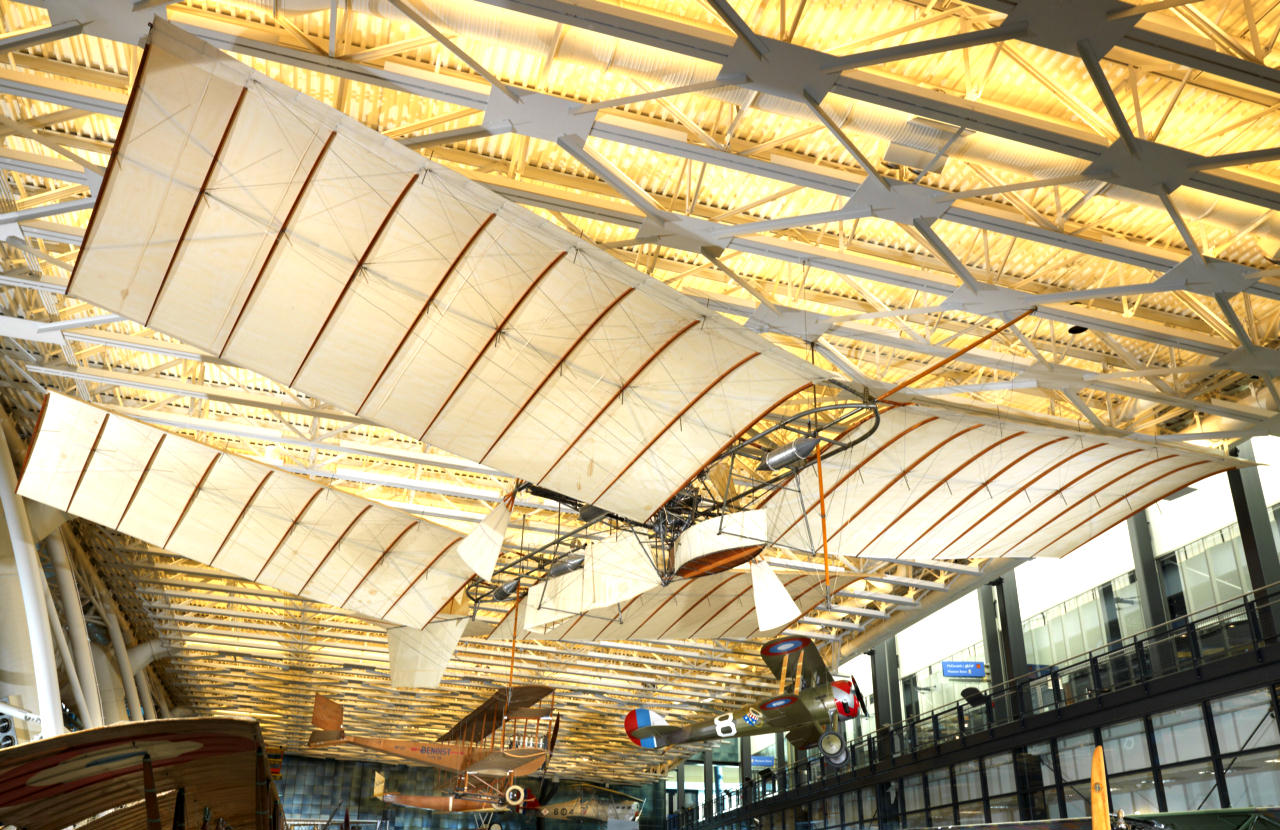
The Langley Aerodrome A was
restored to its original 1903 configuration and now hangs in the
Udvar-Hazy Center, an annex to the Air and Space Museum.
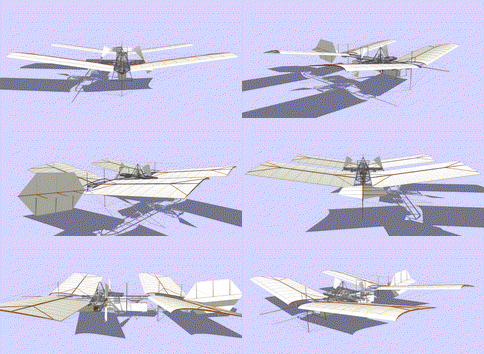
To see an interactive 3D model of Aerodrome A, click
HERE or on the illustration above. You must have a recent Adobe
Reader plug-in (Version 9.0 or later) to view this model.
|
|
Ernest Archdeacon
of France was wealthy lawyer, sportsman, and aviation enthusiast. He built
several experimental gliders, mostly based on Wright designs. More
important, he offered several lucrative prizes to encourage the
development of aviation, especially in France. In May 1903, he and
Ferdinand Ferber created the Aviation Committee in the Aero Club
du France to kindle French interest in heavier-than-air
flight. His hope was to encourage young French aviators to more daring
deeds and beat the Americans – in particular, the Wright brothers – into
the air.
|
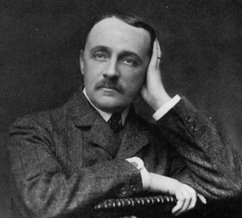
Ernest Archdeacon
|
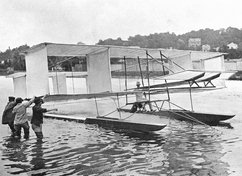
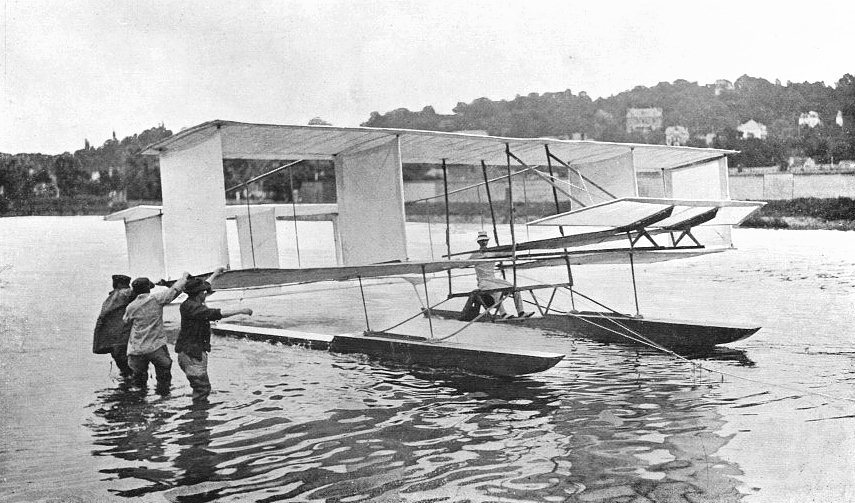
The 1905 Archdeacon floatplane-glider was designed by Archdeacon,
but built and flown by Gabriel Voison.
|
|
|
William Avery
of Chicago, Illinois was a carpenter and electrician when he began
working for
Octave
Chanute in 1895. He
helped build several gliders, including the multi-winged Katydid,
then joined Chanute's band of aviation enthusiasts at the Indiana Dunes to test
the aircraft in the summer of 1896. He was among those who flew the
Chanute-Herring biplane glider, a design which had a huge impact on
early aviation. He also built a glider for
Augustus
Herring and Mathias Arnot and helped test it in 1897. In 1904, he
built an updated version of Chanute's 1896 biplane glider, then made
over forty flights
at the St. Louis World's Fair – one of the first public exhibitions
of gliding flight in America.
|
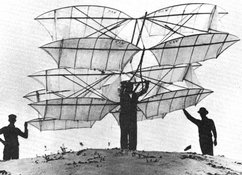
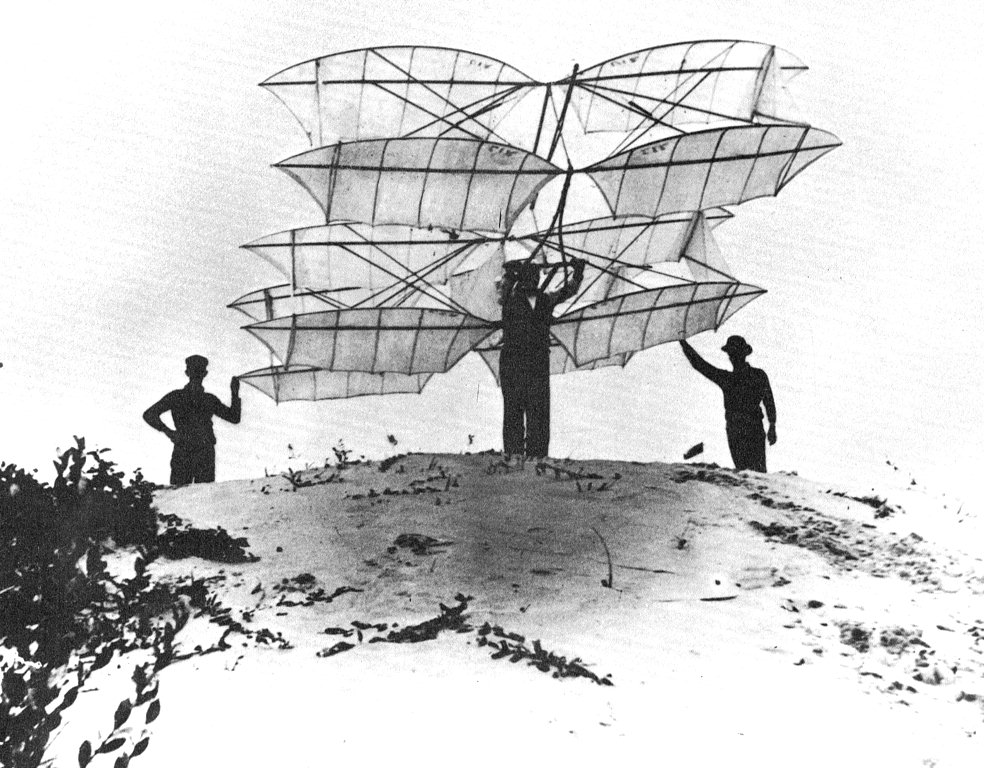
Avery's Katydid at the
Indiana Dunes in the summer of 1896. The wings of this unique
aircraft could be removed and rearranged to adjust the position of
the center of lift. In this manner, Chanute and his associates hoped
to find a stable configuration.
|
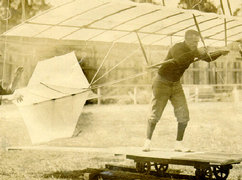
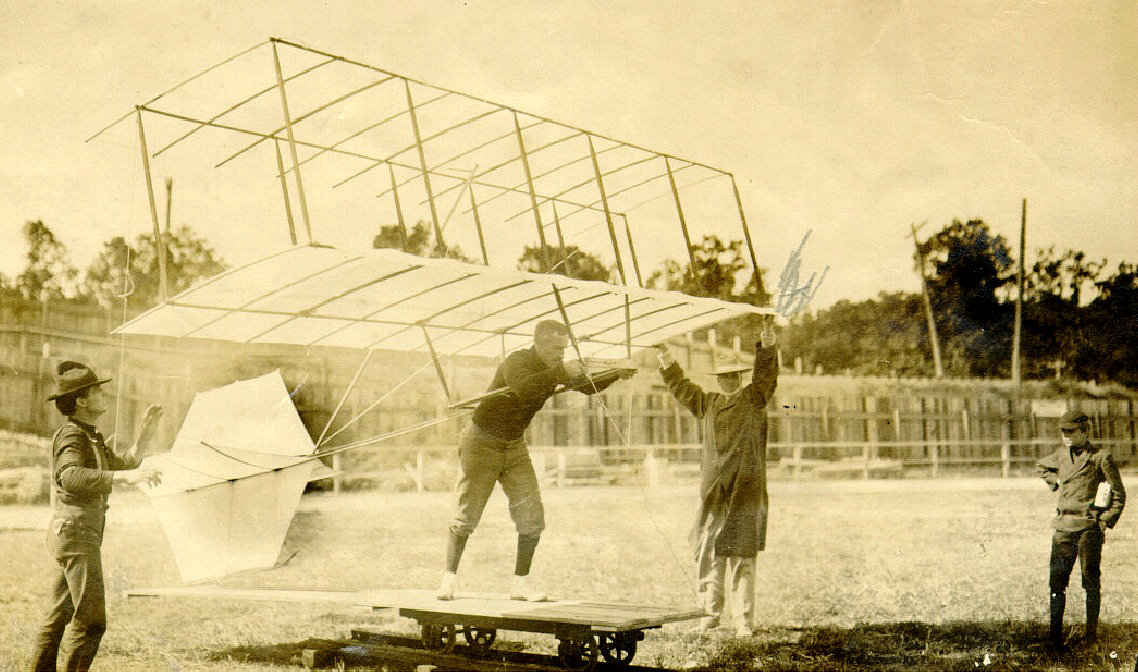
Avery about to launch a Chanute-designed biplane glider in St. Louis in 1904.
The glider followed the same lines as the 1896 Chanute-Herring
glider, but its camber and wing structure were closer to the Wright
gliders Chanute had seen fly at Kitty Hawk in 1901 and 1902.
|
|
|
|
|
|