Winter and Spring
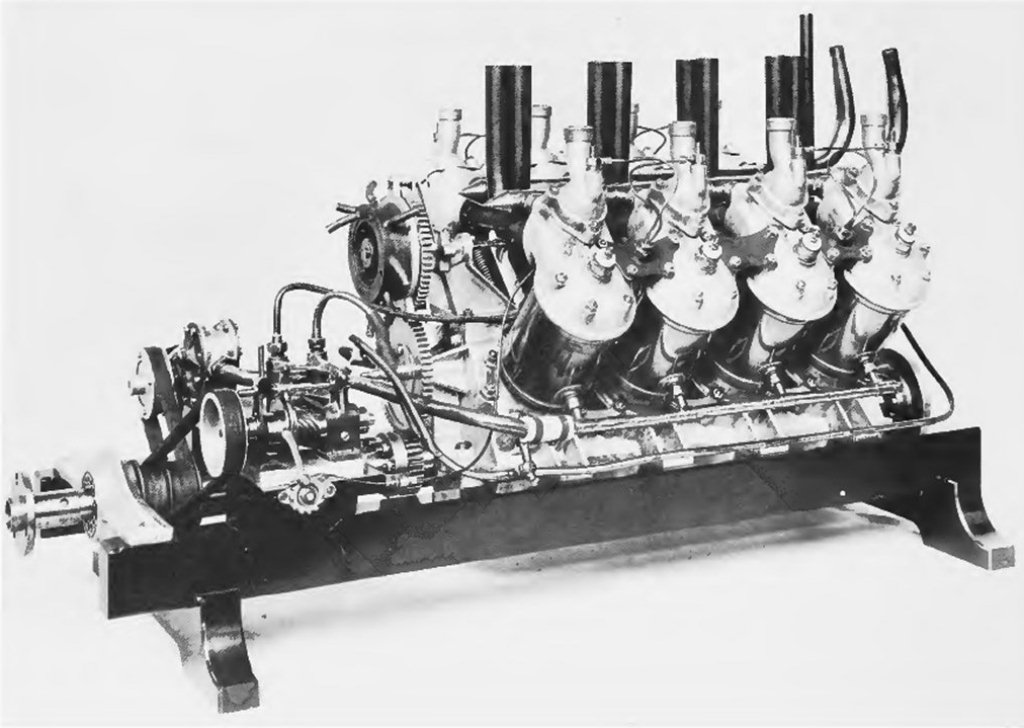
— Leon Levavasseur develops lightweight 25 hp and 50
hp engines that will become the mainstay of pioneer aviation
in Europe. He calls them Antoinette engines after
Antoinette Gastambide, the daughter of his friend and chief
of the manufacturing firm.
January — The Aéro-Club de France meeting
is rocked by the news of the Wright’s accomplishments in September and
October 1905. Ferber accepts the Wrights claims; Archdeacon refuses to believe them. Archdeacon sends a taunting letter to the Wrights,
challenging them to come to France and claim the Grand Prix d’Aviation. The Wrights
do not respond.
January 2
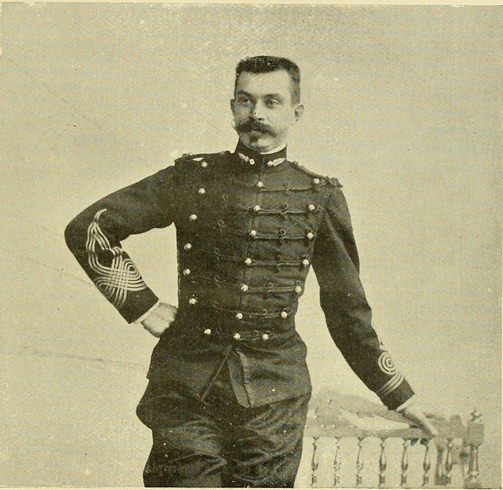
— Alberto Santos Dumont announces his ambition to try
for the Grand Prix d’Aviation and turns from
building dirigibles to building airplanes.
January 13-20
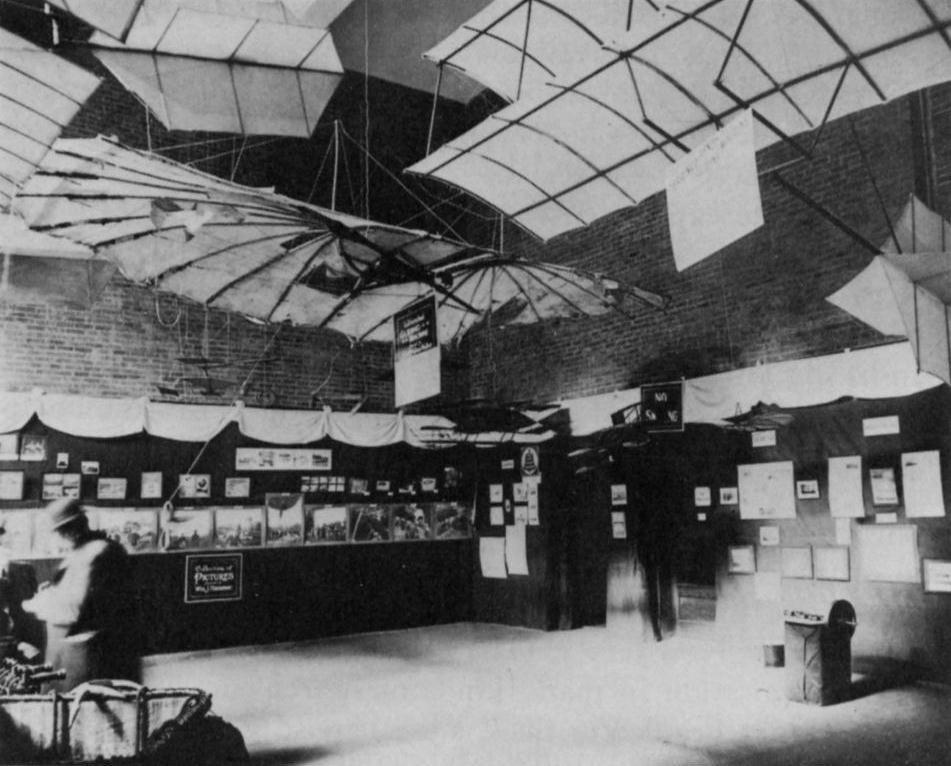
— The newly formed Aero Club of America
organizes the first
"Exhibition of Aeronautical Apparatus"
in America at the 69th Regiment Armory in New York City. The
Wright brothers send the crankshaft and flywheel from their
1903 Wright Flyer engine, as well as photographs of their
glider experiments. During the show, Scientific
American magazine publishes an article casting
aspersions on reports of the Wrights' 1904 and 1905 powered
flights.
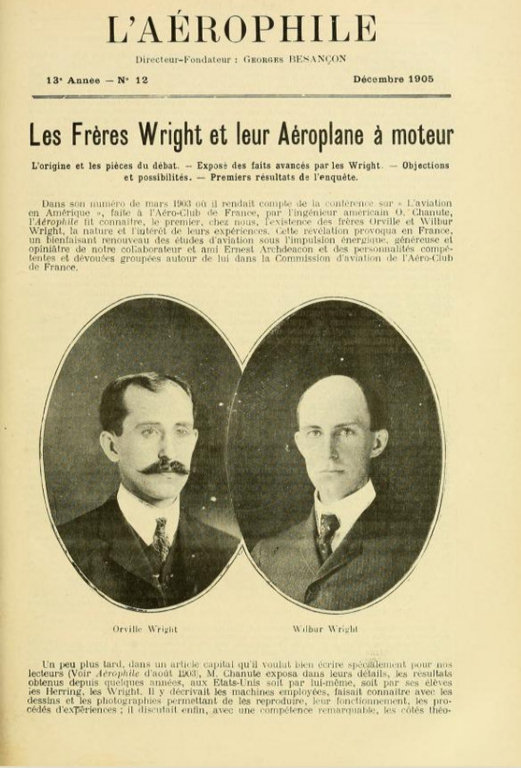
Late January — L’Aerophile
publishes the details of the Wrights' French patent, including complete
information about their methods of three-axis control. Members of the Aéro-Club de France either ignore it or do
not understand its importance.
February
— William J. Hammer, one of the founders of
the Aero Club of America, travels to Dayton, Ohio to
ascertain for himself whether reports of the Wrights'
powered flights are true. He comes away convinced that the
Wright brothers have flown successfully and convinces the
Aero Club to issue a statement supporting the brothers.
Albert F. Zahm, another founding member of the Aero
Club, contacts the Wrights and asks for a statement that can
be published along with the club's letter of support.
February 27
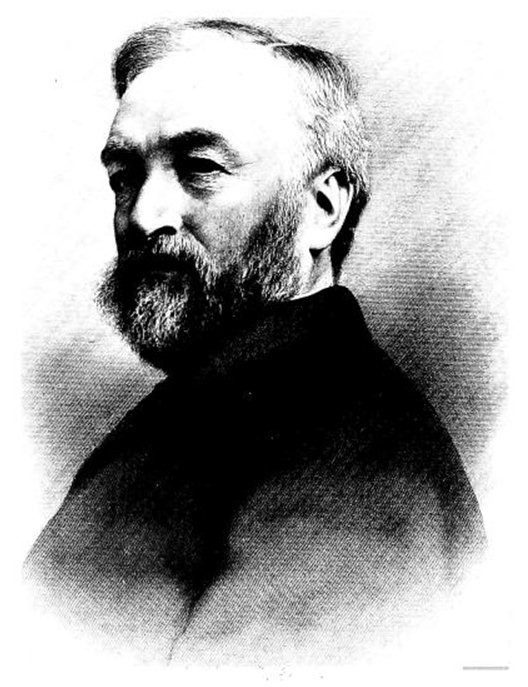
— Samuel Langley dies in South Carolina.
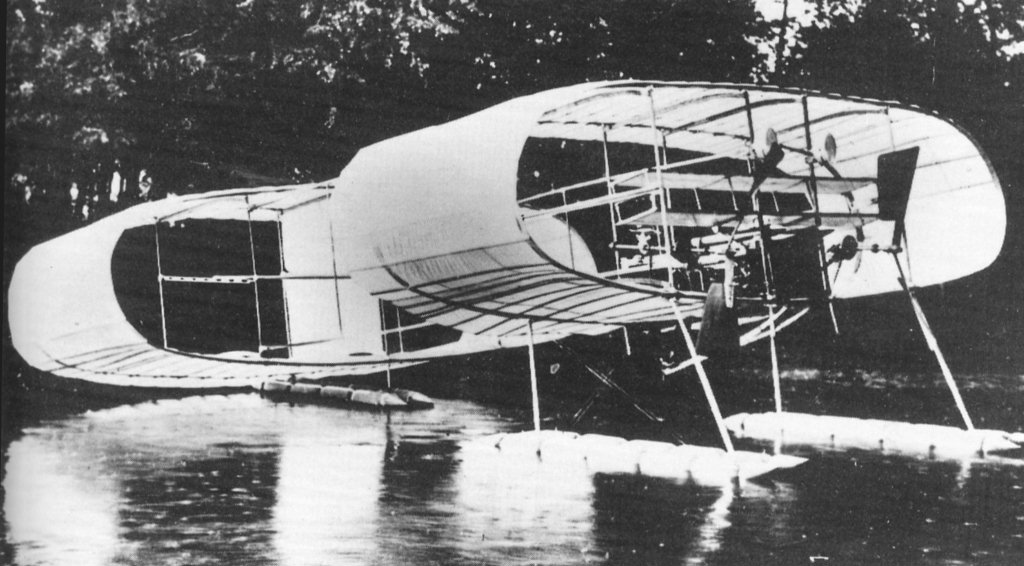
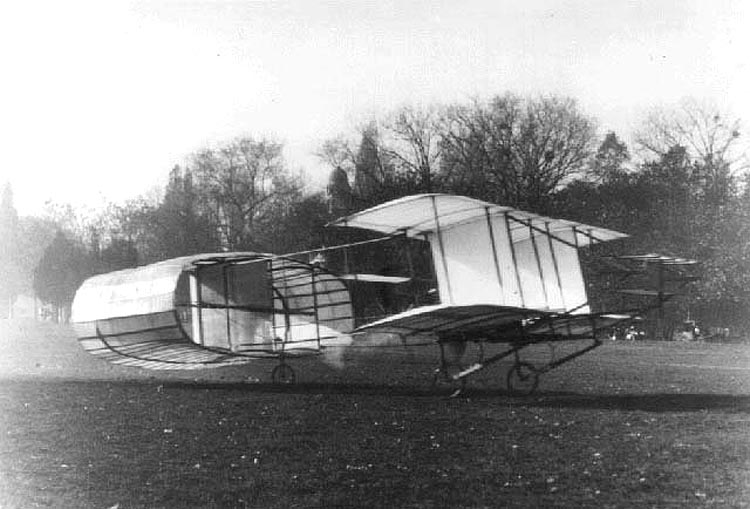
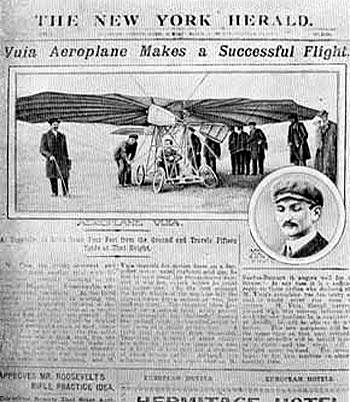
March 3 -- Romanian inventor
Trajan Vuia makes a brief hop (39 feet or 12 meters) in the first
tractor monoplane. The aircraft is not wildly successful, but it starts an important design trend.
March 12
— The Aero Club of America issues a statement
supporting the Wright brothers and stating that the
reports of their success are indeed true. It is accompanied
by a summary of their test flights, signed by both brothers.
This is the first public announcement giving details of the
Wrights' 1904 and 1905 powered flights.
May 22
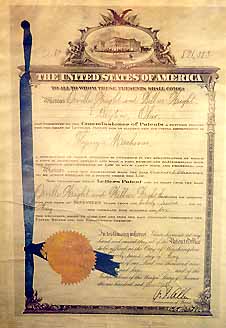
— The Wright brothers are granted U.S. Patent No.
821393 for a "Flying-Machine," describing their three-axis
control system. Because this system will prove fundamental
to navigating an aircraft, the patent will come to be
considered a "pioneer" patent of the airplane.
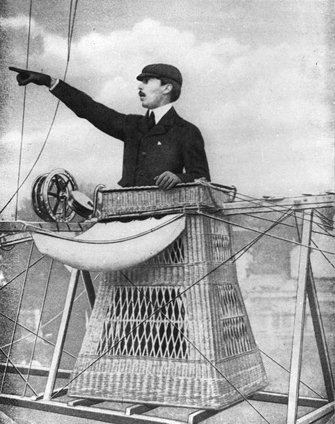
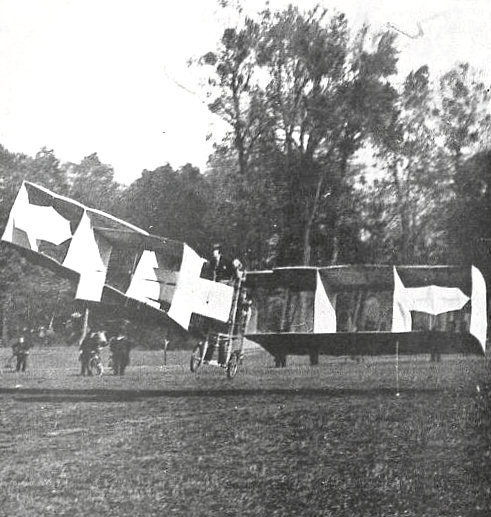
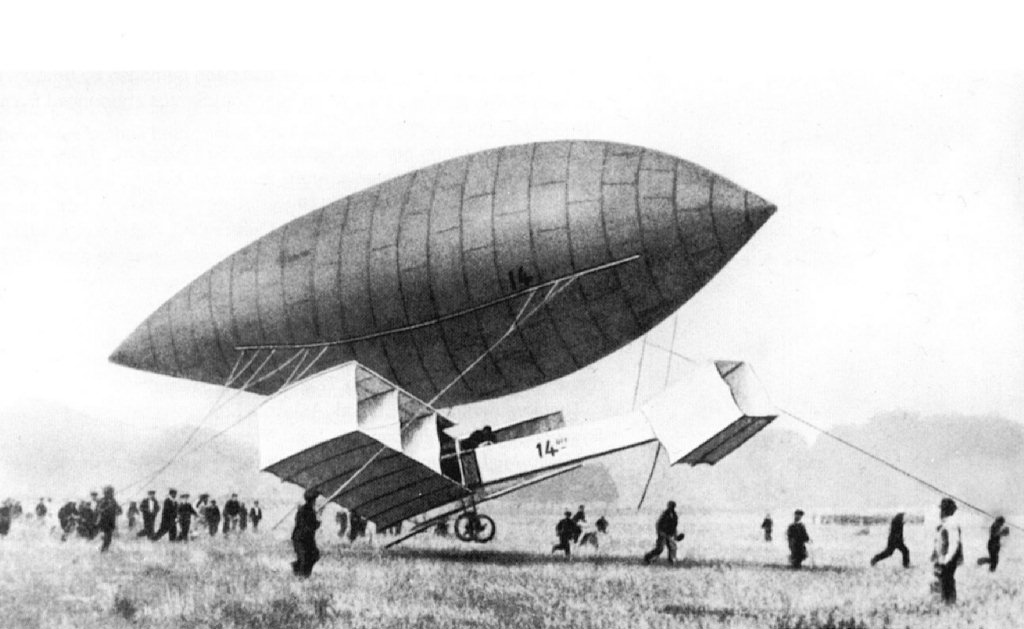
July 23 — Alberto Santos-Dumont, France,
tests the controls of a powered biplane, the 14-Bis, tethered underneath a dirigible.
August 12 and 19 —
Trajan Vuia tries to fly twice more in his tractor monoplane. The
last flight ends with a crash.
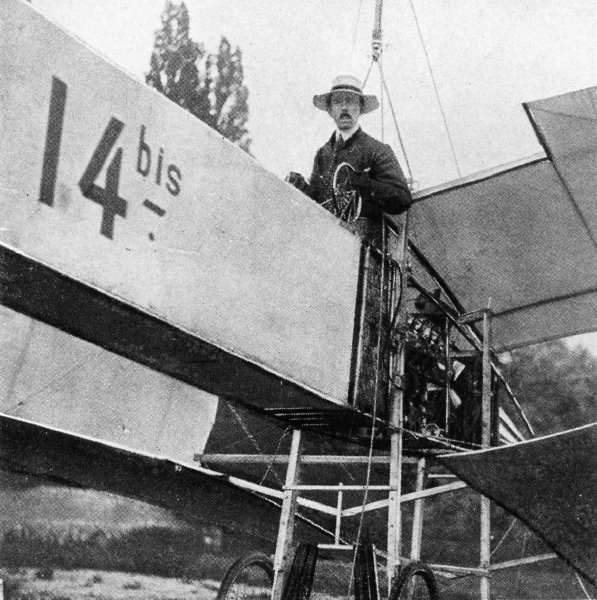
September 13 — Alberto Santos-Dumont,
France, makes several short hops in his 14-Bis.
October — Octave Chanute
informs the Wrights
that the Europeans are catching up to them. Wilbur writes back that he believes the
Europeans won’t have a flyable airplane for 5 years.
October 23 — Alberto Santos-Dumont,
France, flies 197 feet (60 meters) in his 14-Bis, landing quickly
when the aircraft goes into an uncontrolled roll. His flight wins the
Coupe Ernest Archdeacon trophy for the first flight of over 25 meters (82
feet).
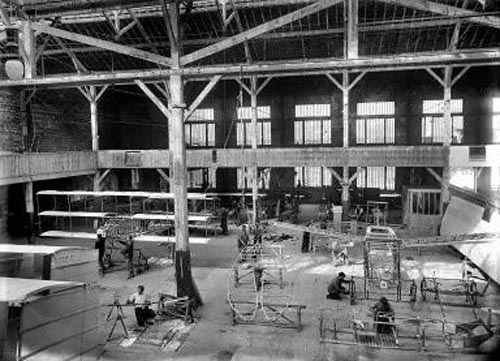
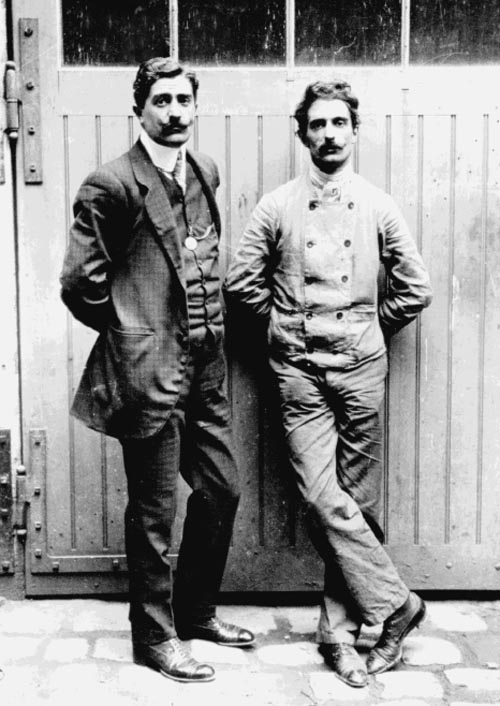
November — Gabriel Voisin
and his brother Charles form the Voisin
Fréres Company to manufacture airplanes.
November 12 — Alberto Santos-Dumont,
France, flies 722 feet (220 meters) in his 14-Bis, winning the
Coupe Ernest Archdeacon cash award for making a flight over 100 meters
(328 feet).




 Need
to
Need
to  he
pioneer aviation era literally flew by, lasting just
a little more than a decade from the first wavering flights at Kitty
Hawk to the beginning of World War I. By this time "second
generation" aircraft had begun to emerge, combining both maneuverability
and stability. This rapid development is all the more remarkable
when you consider that for the first few years, the Wright brothers
were the only successful pioneers. A few visionaries in America and Europe made
brief hops in a handful of airplanes, but nothing approaching the
performance of the Wright Flyer in its final 1905 form. This despite the fact that
these builders had access to the Wrights' published patents. It
wasn't until the Wrights began demonstrating their airplane in 1908
that the rest of the world fully understood the necessity of
three-axis control and how to use it.
he
pioneer aviation era literally flew by, lasting just
a little more than a decade from the first wavering flights at Kitty
Hawk to the beginning of World War I. By this time "second
generation" aircraft had begun to emerge, combining both maneuverability
and stability. This rapid development is all the more remarkable
when you consider that for the first few years, the Wright brothers
were the only successful pioneers. A few visionaries in America and Europe made
brief hops in a handful of airplanes, but nothing approaching the
performance of the Wright Flyer in its final 1905 form. This despite the fact that
these builders had access to the Wrights' published patents. It
wasn't until the Wrights began demonstrating their airplane in 1908
that the rest of the world fully understood the necessity of
three-axis control and how to use it.