|
 Up
Up
 Girding For
Battle

(You are here.)

  Need
to Need
to
find your
bearings?
Try
these
navigation aids:
If
this is your first
visit, please stop by:
Something
to share?
Please:
|
|
Available in Française, Español, Português, Deutsch, Россию,
中文,
日本, and others.
 he
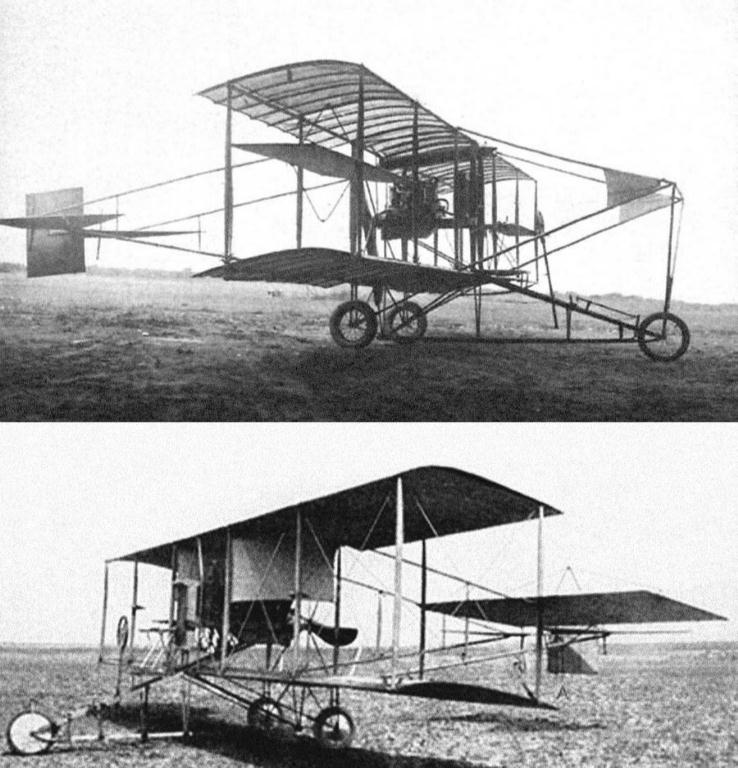
pioneer aviation era literally flew by, lasting just
a little more than a decade from the first wavering flights at Kitty
Hawk to the beginning of World War I. By this time "second
generation" aircraft had begun to emerge, combining both maneuverability
and stability. This rapid development is all the more remarkable
when you consider that for the first few years, the Wright brothers
were the only successful pioneers. A few visionaries in America and Europe made
brief hops in a handful of airplanes, but nothing approaching the
performance of the Wright Flyer in its final 1905 form. This despite the fact that
these builders had access to the Wrights' published patents. It
wasn't until the Wrights began demonstrating their airplane in 1908
that the rest of the world fully understood the necessity of
three-axis control and how to use it. he
pioneer aviation era literally flew by, lasting just
a little more than a decade from the first wavering flights at Kitty
Hawk to the beginning of World War I. By this time "second
generation" aircraft had begun to emerge, combining both maneuverability
and stability. This rapid development is all the more remarkable
when you consider that for the first few years, the Wright brothers
were the only successful pioneers. A few visionaries in America and Europe made
brief hops in a handful of airplanes, but nothing approaching the
performance of the Wright Flyer in its final 1905 form. This despite the fact that
these builders had access to the Wrights' published patents. It
wasn't until the Wrights began demonstrating their airplane in 1908
that the rest of the world fully understood the necessity of
three-axis control and how to use it.
From that moment,
aviation accelerated at an unprecedented rate – and for good reason.
Across the globe, politicians were struggling mightily to maintain
the "balance of power." Diplomacy had become a tangled web of
treaties promising mutual aid in the event of attack. Germany was
locked in an arms race with France and England. World war was
imminent and the airplane looked to be a versatile and deadly
weapon.
-
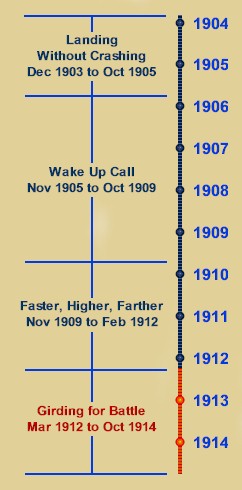
Landing Without Crashing, 1903 to 1905
–
The Wright Brothers develop their temperamental Kitty Hawk Flyer into
a practical flying machine.
- Wake Up Call, 1905 to 1909
–
The Wright brothers accomplishments alert aeronautical
scientists and engineers in America and Europe to the
possibilities of fixed wing aviation.
-
Faster, Higher, Farther, 1909 to 1912
– Pilots and engineers
begin to explore the capabilities and push the possibilities of
aircraft.
- Girding for Battle, 1912 to 1914
– As the First World War
approaches, nations develop the airplane into a weapon.
|
|
Time
|
Event
|
|
1912 |
March —
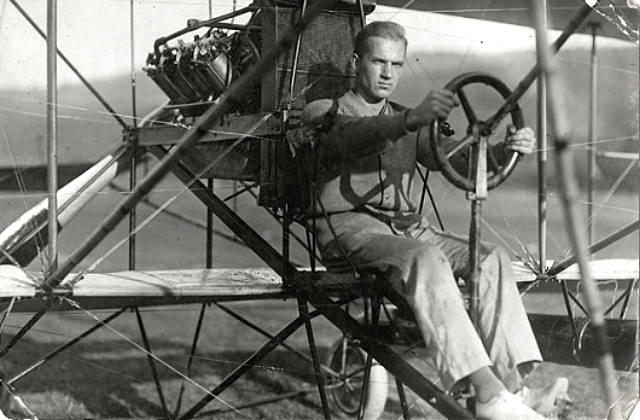
Anton Fokker establishes an airplane factory,
Fokker Aeroplanbau, near Berlin, Germany. Ninety percent
of his planes are sold to the German military.
March 1 —
Albert Berry makes the first successful parachute
jump from an airplane, dropping 1500 feet from a Benoist
pusher piloted by Tony Janus.
March 29
The Aéronautique Militaire becomes a division of the
French armed forces.
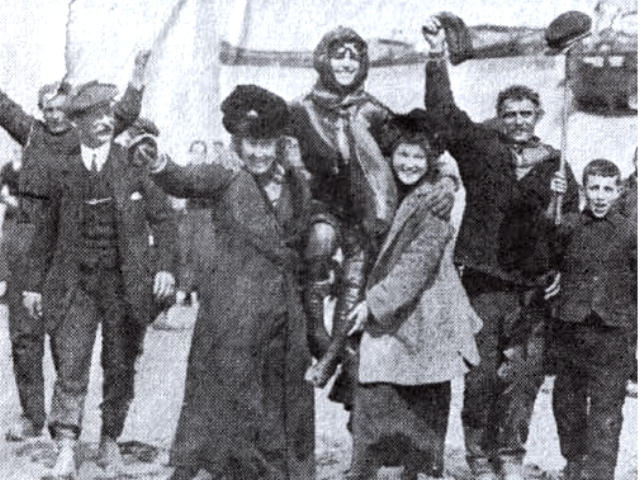
April 16 — Harriet Quimby becomes the first woman to
fly across the
English Channel. She pilots a Blériot from Deal in England to Cap Gris-Nez
in France.
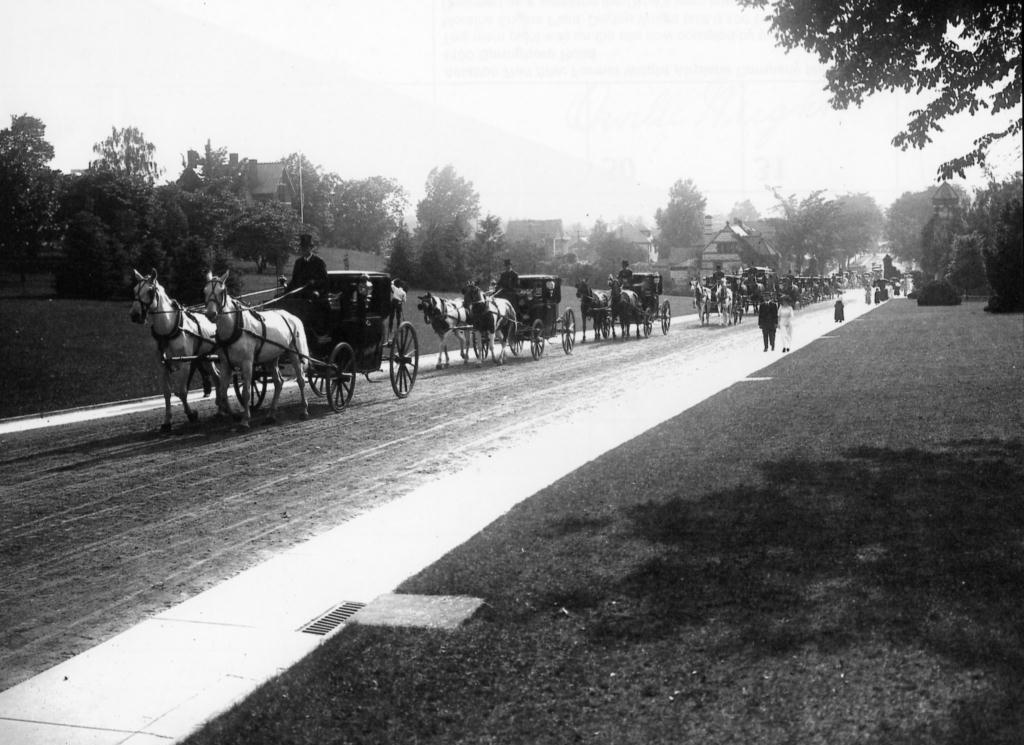
May 30 — Thirteen years to the day after he first wrote the
Smithsonian Institution asking for information on aeronautics, Wilbur
Wright dies of typhoid fever in his home in Dayton, Ohio. Orville
Wright takes over as president of the Wright Company.
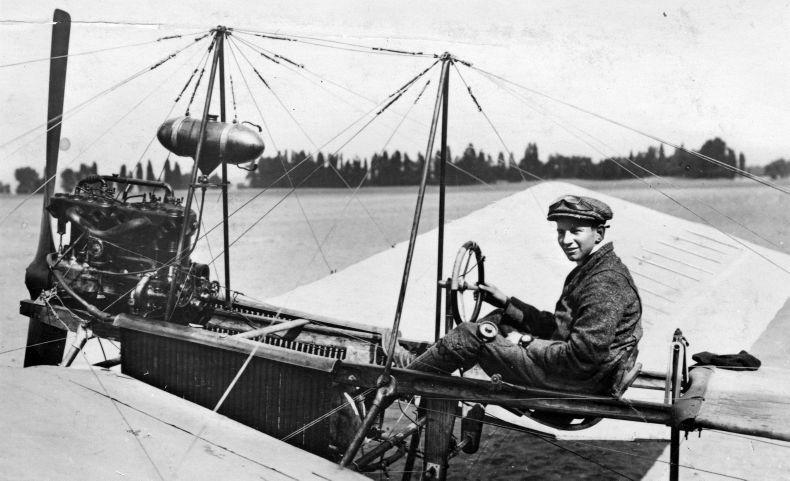
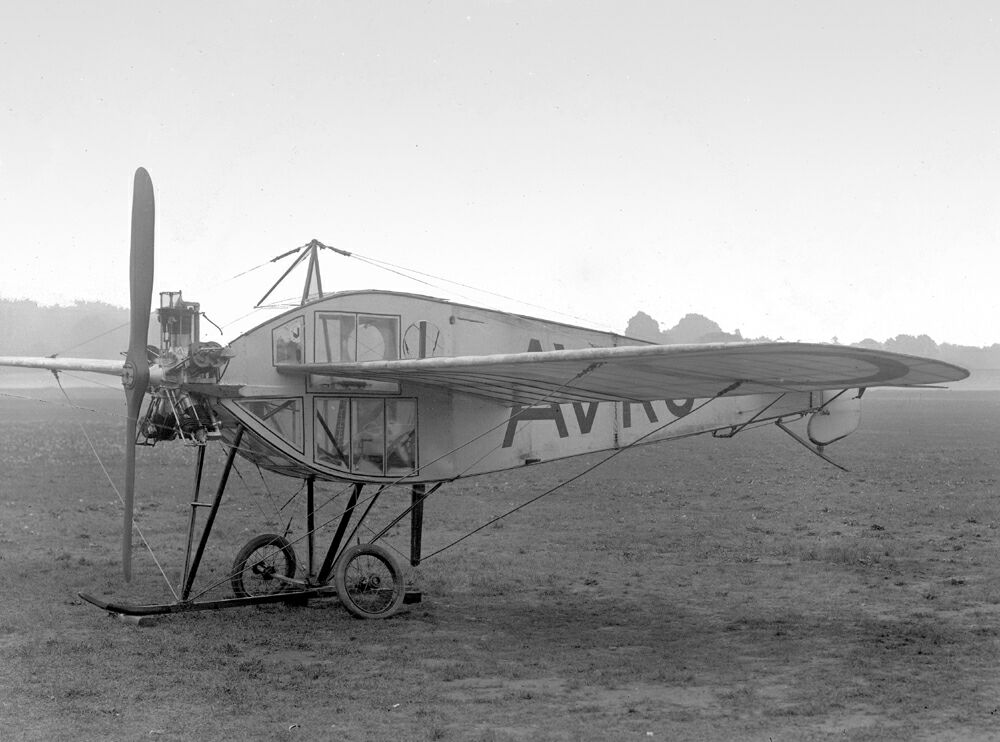
Summer — A.V. Roe builds and tests the first enclosed-cabin
airplane. The Avro F monoplane has a steel frame, a skin of linen
and aluminum, and celluloid windows.
June 7 — At
the request of inventor Isaac Lewis, Capt.
Charles Chandler fires the Lewis machine gun from a
Wright Model B piloted by Lt. Thomas de Witt Milling
at College Park, Maryland, USA. It is the first time a
machine gun has been fired from an airplane. Despite the
success of the test, the US Army declines to adopt the gun.
Lewis takes it to England where it becomes standard armament
on British aircraft.
June 20 —
Lt. John H. Towers is nearly thrown from the
passenger seat of a Wright Model B when a gust of wind
catches it and forces it down into the Chesapeake Bay. The
pilot, Ensign W.D. Billingsley, is thrown out and
killed – the first casualty of naval aviation. Towers'
accident report and recommendation result in the U.S.
military installing seat belts and safety harnesses in its
aircraft.
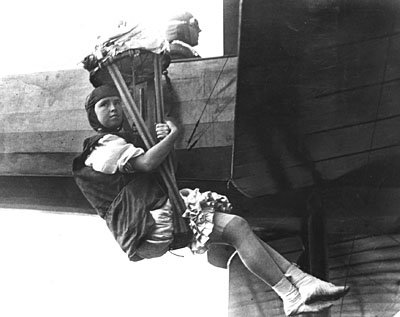
June 21 —
Tiny Broadwick becomes the first woman to parachute from
an airplane. The airplane is piloted by Glenn Martin.
July 27 —
Lt. John Rodgers and En. Charles Maddox send the
first wireless message from an aircraft to a ship. Flying a
Wright Model B, they contact the torpedo boat USS
Stringham.
August 5-16
— Six active US Army pilots – Lt. Harry Graham,
Lt. T. Dewitt Milling, Lt. Benjamin Foulois,
Lt. Harold Geiger, Capt. F. B. Hennessey, and
Lt. Henry "Hap" Arnold – plus Pvt. Beckwith Havens,
a Curtiss pilot recruited just for the occasion, participate
in the first war games to use airplanes. The Red and Blue
Armies fight over Danbury, Connecticut. Each side uses
aircraft equipped with wireless telegraphy for
reconnaissance.
October 1 —
The German armed forces establishes the Military Aviation
Services.
October 26 —
Lt. John H. Towers experiments with the use of
aircraft for anti-submarine warfare. Later, he will
demonstrate this capability during U.S. naval exercises
at Guantanamo Bay, Cuba.
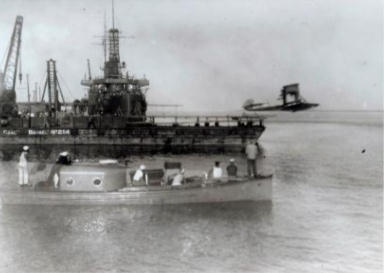
November 12 — The Navy launches a Curtiss seaplane, flown by Lt.
T. Gordon Ellyson, from a coal barge using a compressed air catapult.
This was the first successful catapult launch from a ship of any kind.
November 19
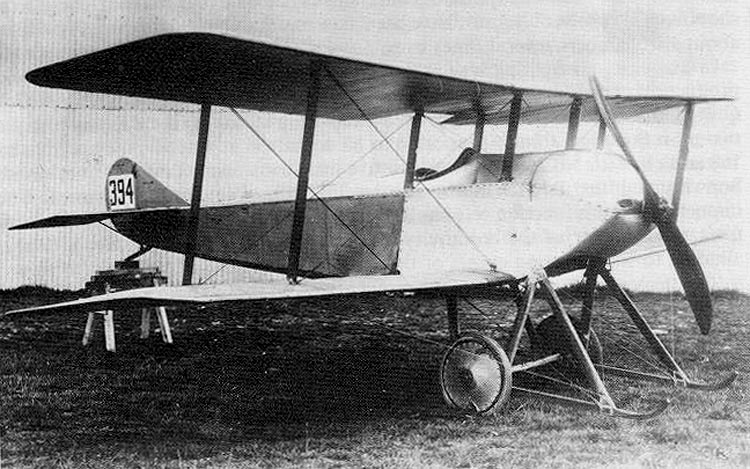
— The British Admiralty asks Vickers LTD
to produce an aircraft armed with a machine gun, the first
aircraft purposefully designed for shooting down other
aircraft.
November 28
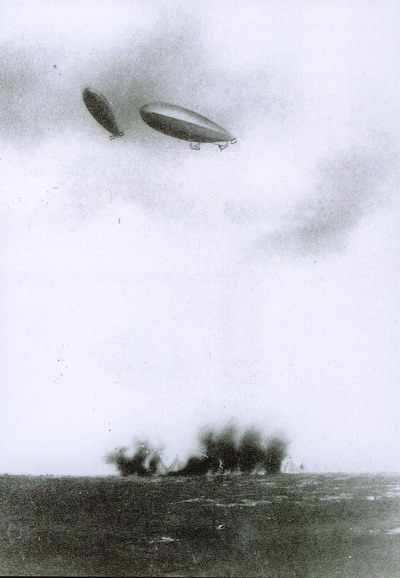
— Italy establishes the first autonomous air force,
the Flotta Aerea d'Italia. It's not connected to any
other branch of their armed forces.
|
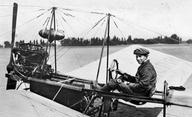
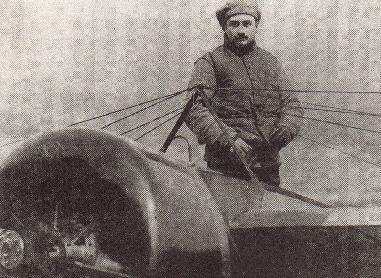
Anton Fokker in his first aircraft, the
Spinne (Spider).
Fokker developed this into the
Eindecker monoplane.
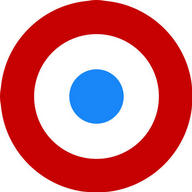
The French Aéronautique Militaire adopted the familiar
"roundel" to identify their airplanes in the air.
Wilbur Wright's funeral procession in Dayton, Ohio.
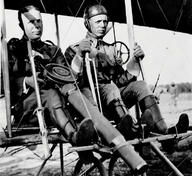
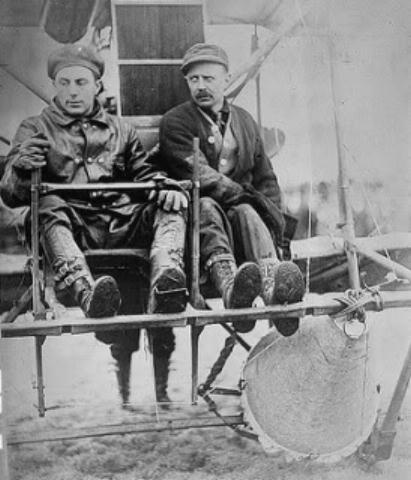
Captain Charles Chandler (with Lewis Gun) and pilot Lt. Roy
Kirtland in a Wright Model B at College Park, Maryland.
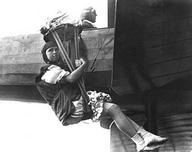
Tiny Broadwick hanging behind a wing, ready for a parachute
jump. The parachute is rolled up on a ledge above her.

Signal Corps No. 2 (a Curtiss aircraft) and Lt. Harold
Geiger (facing camera) at the Connecticut War Games.
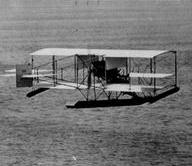
The Curtiss A-1 Triad could be flown low and slow, making it
a good aircraft for searching out and bombarding submarines.
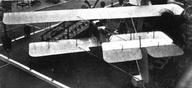
The Vickers EFB-1 was the first aircraft designed and built
with an onboard machine gun. |
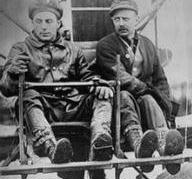
Albert Berry (right) about to make a parachute jump. The
chute is rolled up in the cone beneath his feet and to the
right. Parachute "packs" were
invented later.
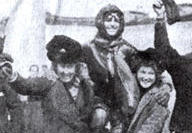
Harriet Quimby is carried triumphantly on the shoulders of
French spectators after crossing the English Channel.

The Avro F was not popular. Aviators resisted enclosed
cockpits for years, saying the cabin limited visibility..

Lt. John H. Towers trained to fly Curtiss aircraft, which is
why he was in the passenger seat of the Wright airplane when
it ditched.
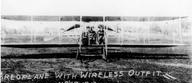
Military Wright Model B equipped with wireless telegraphy.
The pilot or passenger tapped out a signal in Morse code.
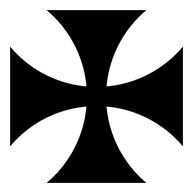
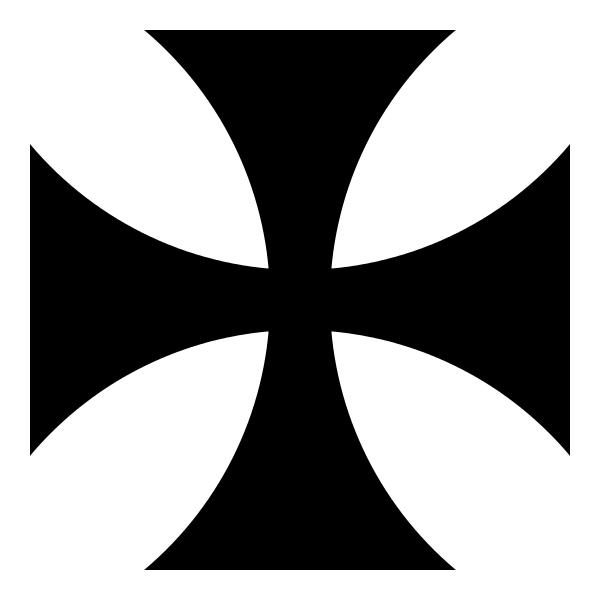
Soon after the German Military Aviation Services formed,
they adopted the Iron Cross as their identifying insignia.
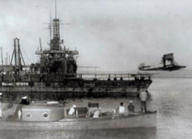
Launching a Curtiss seaplane from a coal barge.

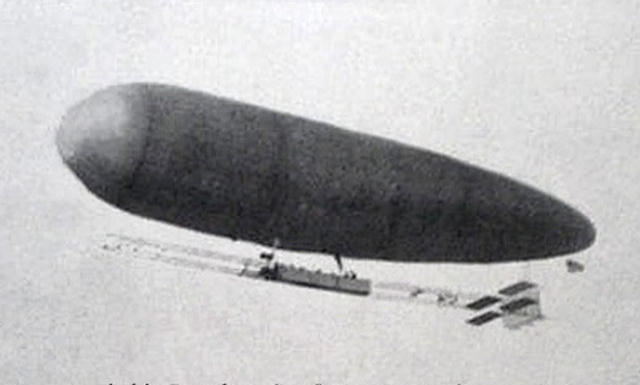
The Flotta Aerea d'Italia (Air Fleet of Italy) included both
heavier- and lighter-than-aircraft. These are Italian
military dirigibles bombing Turkish troops in Libya in 1912
|
|
1913 |
February 14-22 —
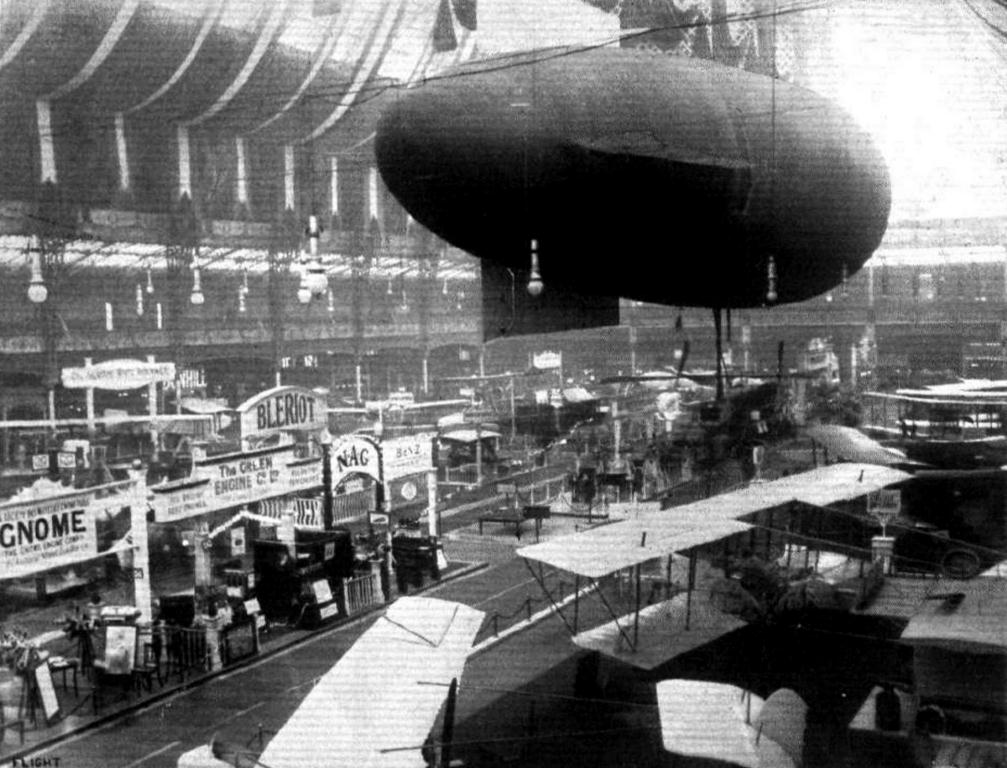
The Olympia Aero Exhibition in London, England marks
the beginning of the end of pioneer aviation. Gone are the
open, kite-like air frames; all the latest aircraft have
enclosed fuselages with cockpits and control panels.
Aircraft motors brag of almost 200 horsepower, design
emphasizes streamlining and speed, stick-and-rudder control
systems are becoming standard. More ominously, the show
introduces a new type of aircraft, the "war airplane."
February 27
—
Judge
John R. Hazel of the United States District Court for the Western
District of New York returns his decision on the Wright vs.
Curtiss patent suit. He finds in favor of the Wright brothers
and awards the Wright patent "pioneer" status.
This affords the patent holder a much broader interpretation of his claims
and greater protection under US patent law. Glenn Curtiss
files an appeal to the United States Court of Appeals and
Judge Learned Hand is assigned to the case.
March 15 —
The United States Army forms the 1st Aero Squadron
under Capt. Charles Chandler to scout for rebel
Mexican troops and bandits along the border. The squadron is
based at Texas City, Texas
April 1
— Alfred, Lord Northcliffe, publisher of the
London Daily Mail offers a
prize 10,000 pounds for the first pilot to cross the Atlantic in an
airplane. The prize is withdrawn at the start of World War I but renewed
shortly thereafter.
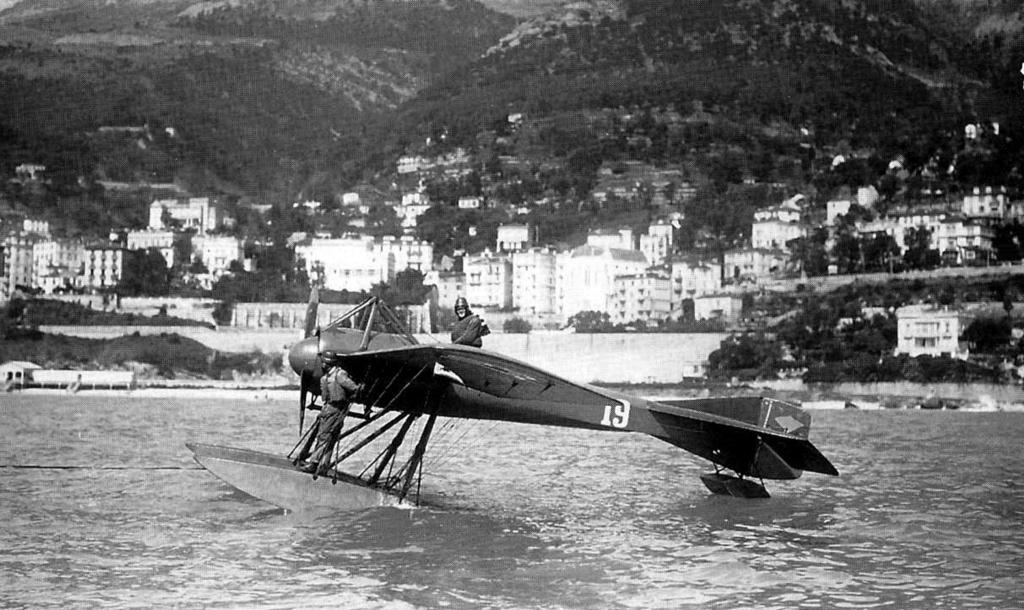
April 16
— Maurice Provost, flying a Deperdussin, wins the first
Schneider Trophy contest, a speed trial for seaplanes in Monaco. More
than any other contest, the Schneider Trophy spurs the development of
aircraft engines.
May 13
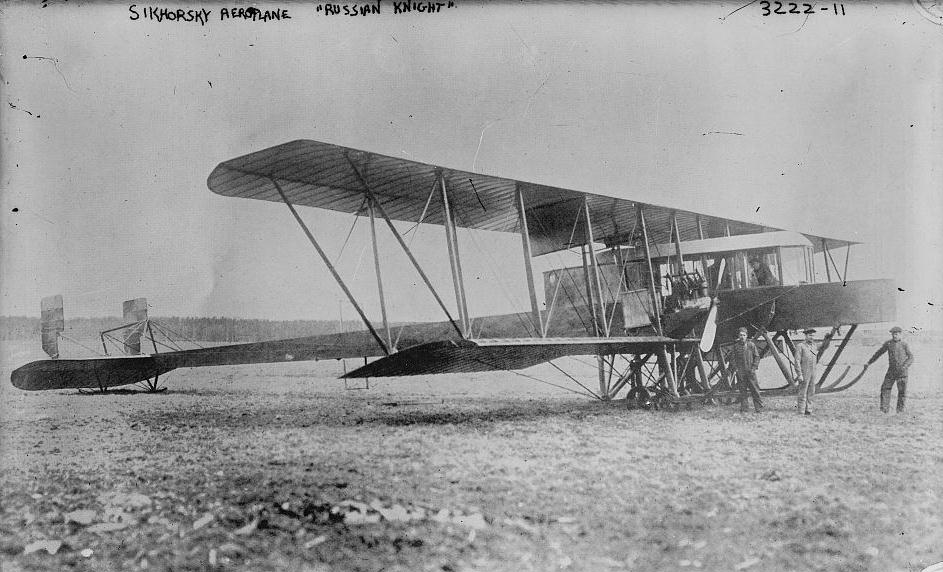
— Igor Sikorsky pilots the huge
Russky Vityaz
on its first flight, carrying 8 passengers. With 4 engines, a wingspan of
92 feet, an open-air observation deck, and a total weight of 4080
kilograms (8995 pounds), it is the largest airplane in
the world. Although many European engineers had predicted its failure, the Russky Vityaz
proves the feasibility of large aircraft.
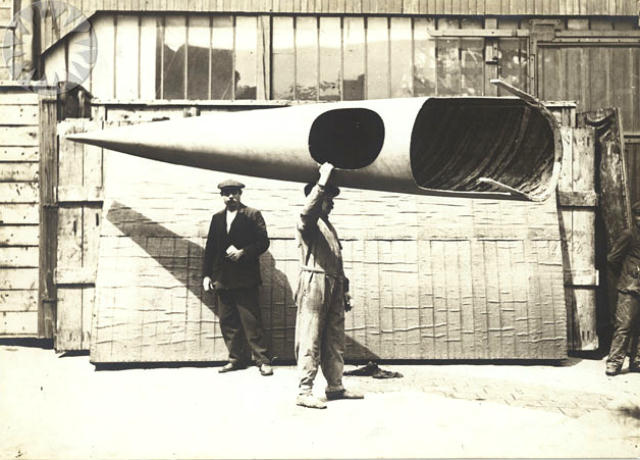
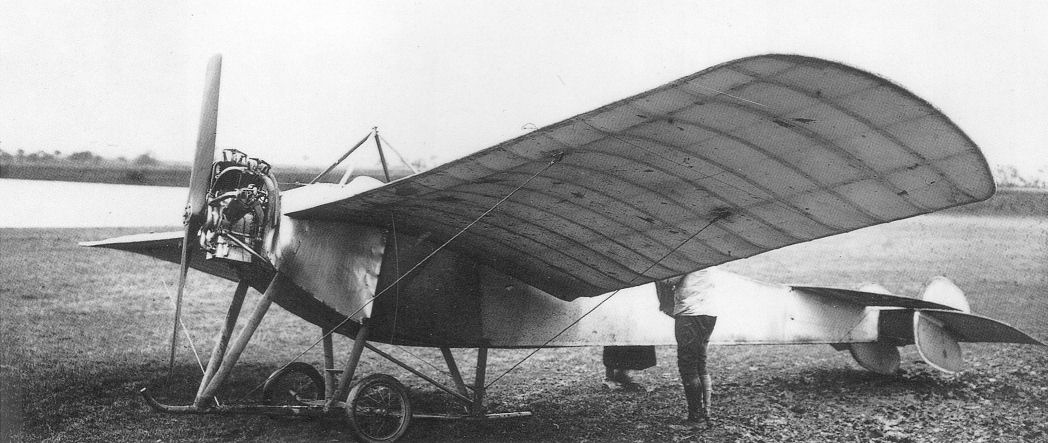
June — French engineer Louis Bechereau
of Societé de Production Armand Deperdussin (SPAD) unveils their
newest monoplane racer with a monocoque fuselage. This revolutionary method of construction
uses the skin of the aircraft to carry structural loads. This, in turn,
reduces the number of structural parts, making the aircraft lighter, more
streamlined, and simpler to build. August 10 —
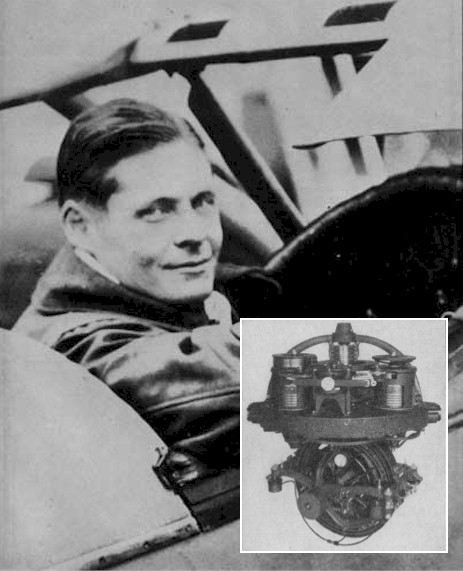
Lawrence Sperry and Lt. Patrick Berringer
test an experimental device that uses 4 gyroscopes turning
at 7000 rpm to stabilize a Curtiss Model F in flight.
It is the beginning of the modern autopilot. September 9
— Pyotr Nesterov, a young Russian officer out for a
joy ride, flies the first loop-de-loop on record in a Nieuport IV. He is promptly placed
under house arrest for endangering government property.
September 18
— A.V. Roe develops the Avro 504,
a two-seat military scout and trainer that was used up until the 1930s.
More Avro 504s are manufactured during World War I
than any other aircraft. September 21
— Adolphe Pegoud flies the first public
loop-de-loop in a Bleriot monoplane near Buc, France. This and other
stunts (such as flying inverted) make him the first
aerobatic pilot. These aerobatics would soon become the basis for evasive
maneuvers used by combat pilots in World War I.
September 21
— Roland Garros flies 453 miles (729
kilometers) across the Mediterranean in a Morane-Saulnier
monoplane, from Saint-Raphael to Bizerte in Tunisia.
November —
T.O.M. Sopwith develops the
Tabloid Scout, a highly maneuverable biplane able to climb to 15,000
feet in 10 minutes. This will develop into the Sopwith Camel, one of
the most effective fighters of World War I. November 21
— Spanish pilot Lt. Rios and observer Capt.
Manuel Barreiro are seriously wounded be rifle fire from
Moroccan soldiers on the ground in Tangiers, dispelling the notion that
airplanes present a target that is impossible to hit from the
ground.
November 30
— During the Mexican Revolution, American mercenary pilots Dean Ivan Lamb, flying
for the Carrancistas
(supporters of Venustiano Carranza), and Philip Rader, flying for
then-President Victoriano Huerta, exchange pistol shots over Naca, Mexico in
the the world's first aerial
combat. Neither is hit.
December 10 —
Igor Sikorsky flies the huge 4-engine
Ilya Muromets, the first true airliner. It is
equipped with a heated cabin, electric lighting,
wicker chairs, a bedroom, a lounge and even the first
airborne toilet. Sikorsky later flies it with 16 passengers
and it might have gone into commercial service had not World
War I broken out. Instead, it is converted to become the
first heavy bomber.
December 28
—
Georges Lagagneux climbs to a record-breaking
altitude of 6120 meters (20,079 feet) in a Nieuport II-N
and becomes the first pilot to use oxygen in flight.
|
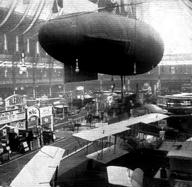
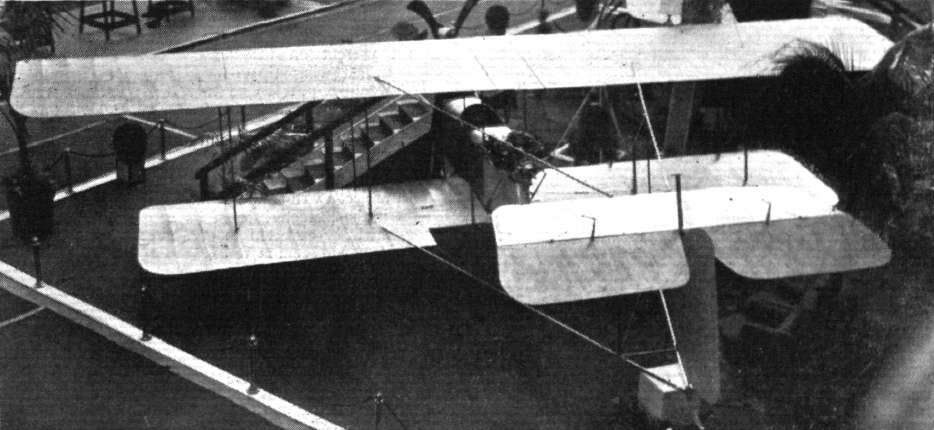
The fourth annual Aero Exhibition filled the massive Olympia
with 4 acres (16,200 square meters) of airplanes, engine,
dirigibles, and other new aviation equipment
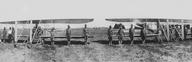
A panoramic view encompassing the entire 1rst Aero Squadron
in Texas City, Texas.
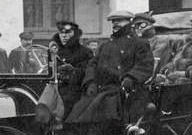
Lord Northcliffe (center, closest to the camera) offered
dozens of cash prizes through
The Daily Mail to
spur the development of aviation -- and generate interesting
news.

Sikorky's Russky Vityaz
("Russian Knight") first flew with just two engines
(shown); two more were added later.
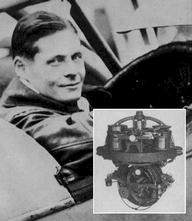
Lawrence Sperry and his gyroscopic stabilizer.
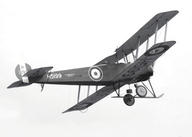
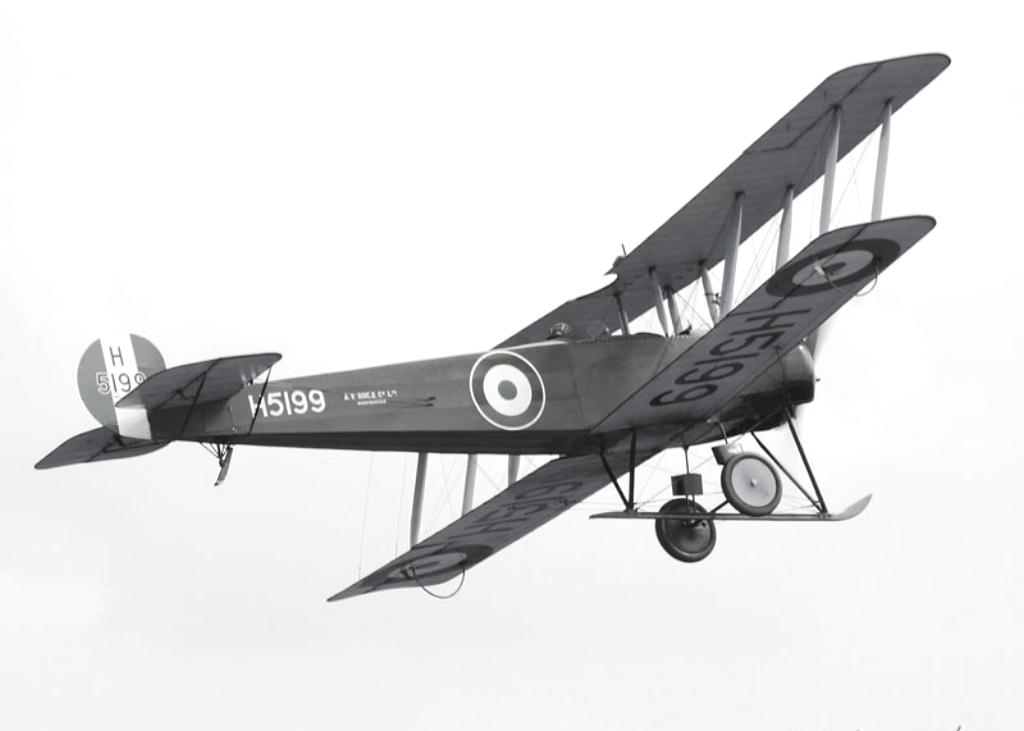
Although designed as a trainer, the Avro 504 was also used
as a fighter and bomber early in World War I.
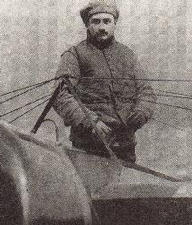
Roland Garros immediately after crossing the Mediterranean
Sea.
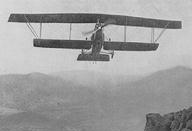
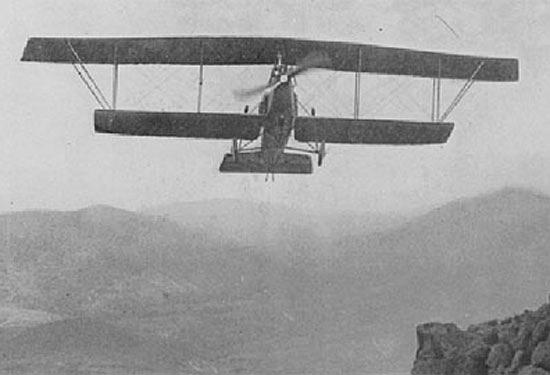
The Spanish expeditionary force in Tangiers included four
Lohner Pfeilfliegers
("Arrow Flyers"), one of the first swept-wing
aircraft. Rios and Barreiro were flying one of these when
they were shot.

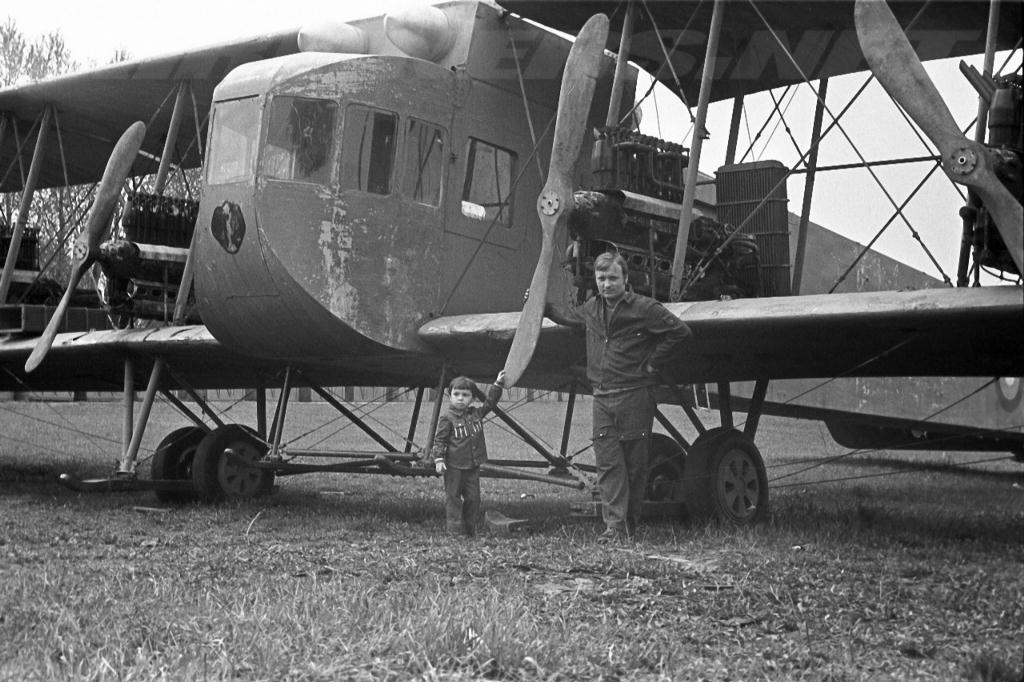
An unidentified adult and child stand beside a replica of the huge
Ilya Muromets,
built for a Russian museum.
Ilya
Muromets was a legendary hero who saved Russia from
invaders.
|
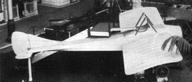
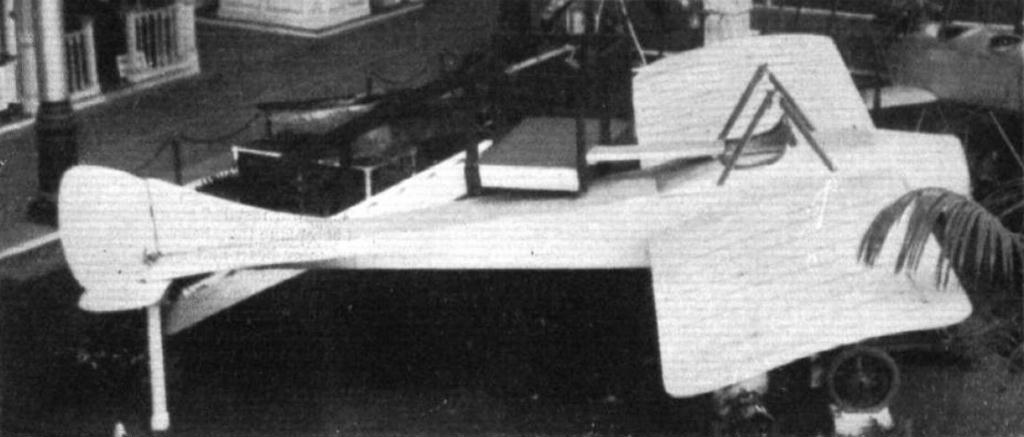
Among the many airplanes at the Olympia Aero Exhibition was
this sleek Vickers "War
Monoplane."
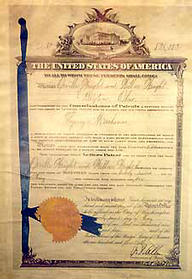
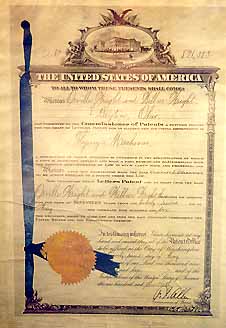
Certificate granting O.Wright and W. Wright patent No.
821,393 on a "Flying Machine."

Maurice Prevost at the controls of his Deperdussin seaplane
off the shores of Monaco where he won the first Schneider
Trophy..
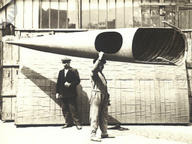
A SPAD worker carries a monocoque Deperdussin fuselage to
show it's light weight.
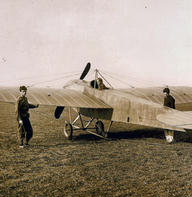
The very first aerobatics were performed by Pyotr Nesterov
in a French Nieuport IV.
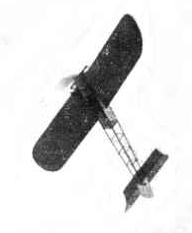
Adolphe Pegoud at the beginning of a loop.
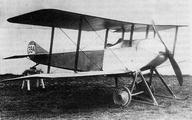
The Sopwith Tabloid was so-called because of its relatively
small size and the sensation it caused when first
introduced. With just an 80 hp Gnome rotary engine, it flew
92 mph (148 kph).
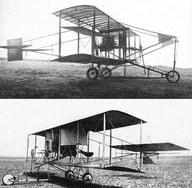
The first aircraft to engage in a dogfight were a beat-up
Curtiss Pusher (top) flown by Lamb, and a Christofferson
Pusher (bottom) in only slightly better condition flown by
Rader. According to Lamb, the dogfight was staged; the
pilots were friends and didn't want to hurt each other.
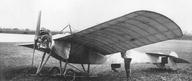
The tiny, fast Nieuport II-N carried Georges Lagagneux
nearly 4 miles (6 kilometers) above the earth.
|
|
1914 |
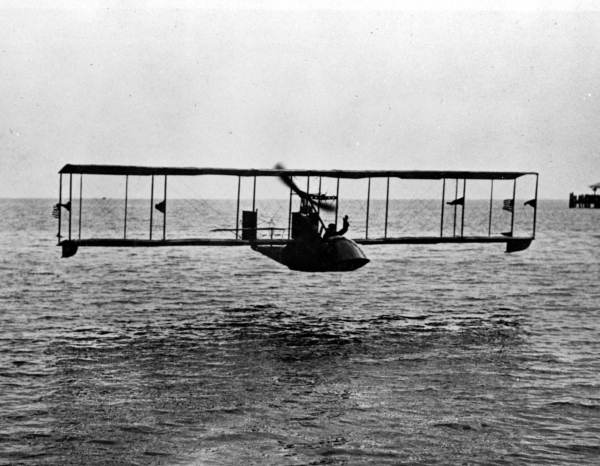
January 1
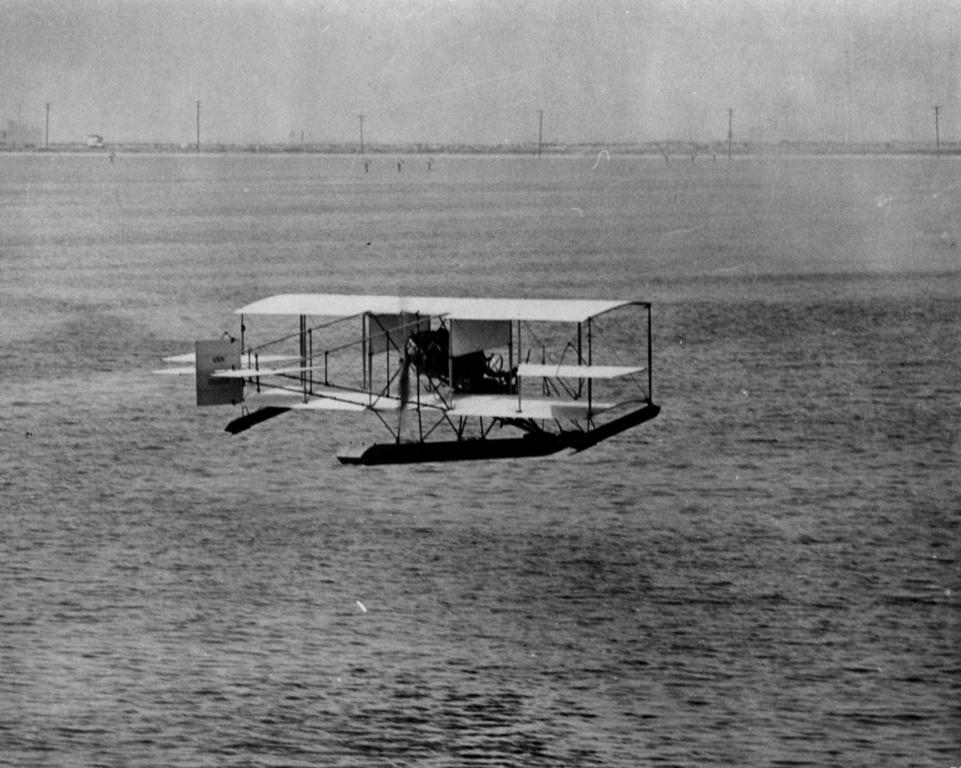
— P.E. Fansler founds the first regularly scheduled airline
to use fixed-wing aircraft,
with pilot Tony Jannus flying both passengers and freight between Tampa and St. Petersburg (22
miles or 34 kilometers) in a Benoist flying boat. The airline survives only until March,
but carries 1,024 passengers without a single mishap. On this same
day, the Chinese Army forms the Chinese Army Air
Arm.
January
13 — A panel of three judges
from the United States Court of Appeals for the Second Circuit upholds Judge
John R. Hazel's original decision concerning
the Wright vs. Curtiss patent suit, including the pioneer status of
the Wright patent. This establishes the Wright
brothers as both the historic and legal inventors of the
three-axis aerodynamic control system (roll, pitch, yaw) for the airplane.
February — Glenn Curtiss begins to build a huge flying boat,
the America, to capture The Daily Mail Atlantic Prize for the first flight
across the Atlantic. Flight tests continue into the summer.
February 24
— After a rash of fatal
accidents, the U.S. Army grounds all Wright and Curtiss "pusher"
airplanes, leaving the Army with almost nothing to fly. Glenn Martin
offers a tractor biplane to fill the gap, the the Martin Model T becomes
the Army's first "safe" training airplane.
April 20 —
The USS Mississippi transports three Navy aircraft to support US
troops and fly reconnaissance in Vera Cruz, Mexico. This is the US
Navy's first aviation mission.
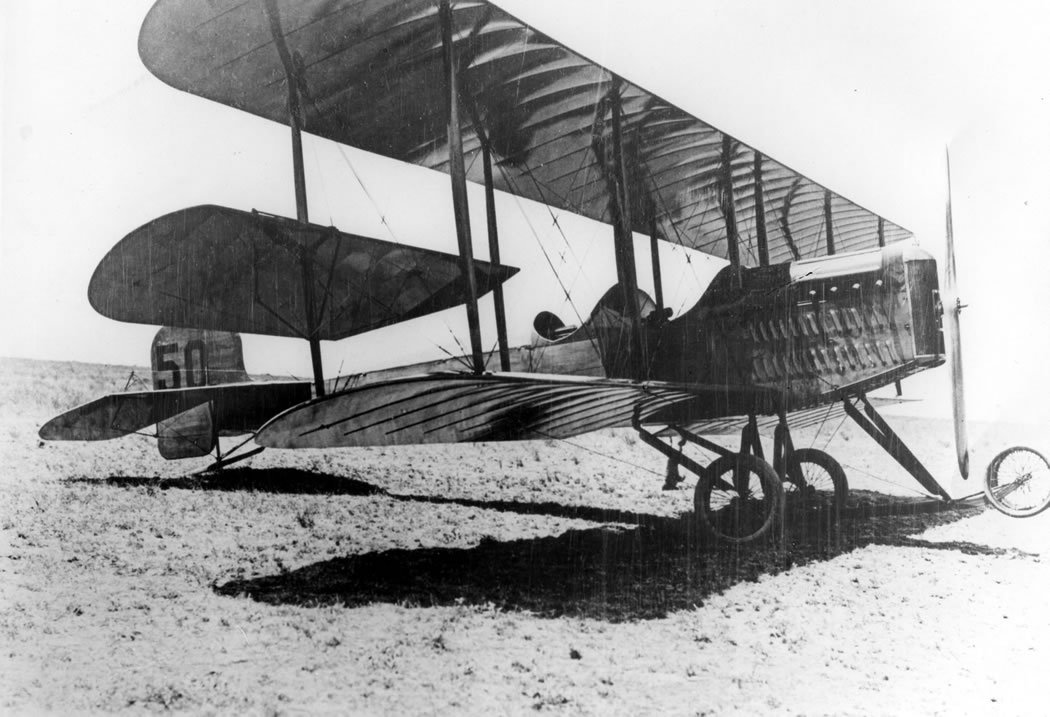
April 24 — Glenn Curtiss unveils the
Curtiss Model J, a
tractor biplane designed by B. Douglas Thomas. Thomas had formally
been an engineer for Sopwith Aviation in England, and the Model J
incorporates all the latest advances in European biplane design.
May 28 — In an attempt to nullify the legal decision of Curtiss vs.
Wright,
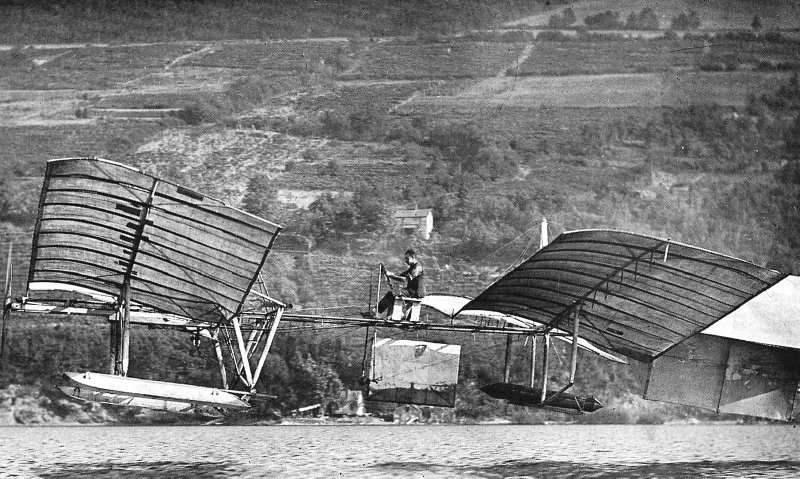
Glenn Curtiss "restores" the 1903 Langley
Aerodrome and flies it from Lake Keuka ostensibly to prove the Aerodrome
was the first airplane capable of manned flight. In reality,
Curtiss has made over 30 major modifications to the Aerodrome to make it
airworthy. The flights have no effect on the patent litigation.
July 4 — Tiny Broadwick makes the
first jump with a modern parachute – packed in a backpack
and released with a rip cord – over San Diego, California.
June 29 —
Igor Sikorsky and his crew serve the first inflight
meals aboard the
Ilya Muromets on a flight from Kiev to St.
Petersburg.
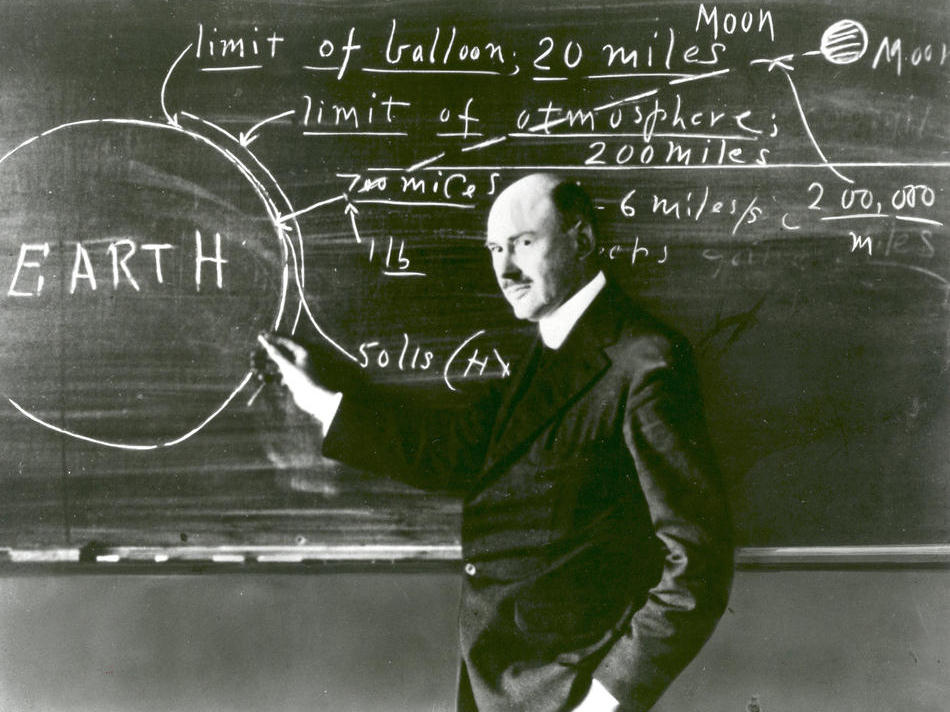
July 14 —
Robert H. Goddard is granted a patent for a
liquid-fueled rocket.
June 18 —
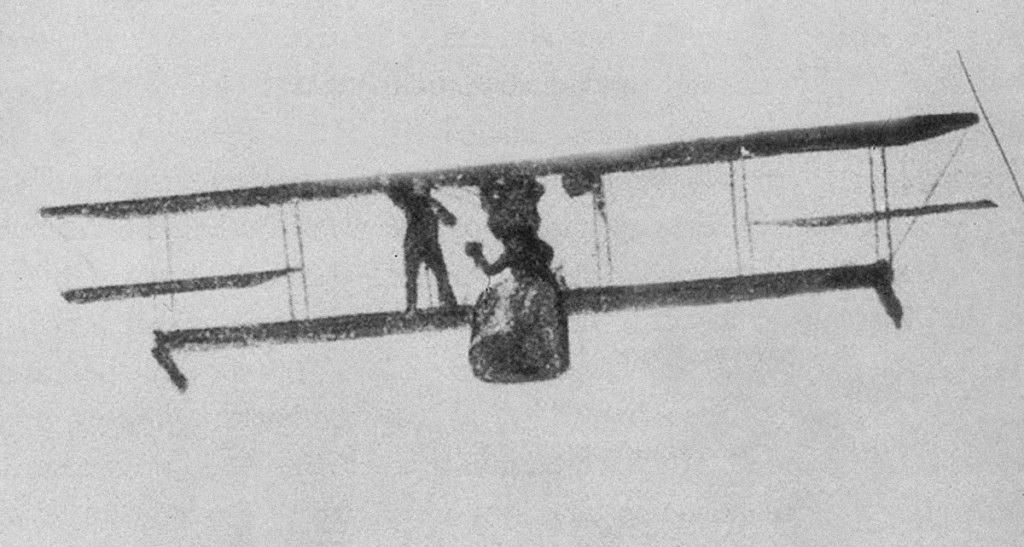
Lawrence Sperry and Emil Cachin demonstrate a gyroscopic
automatic stabilizer in a Curtiss C-2 at the Concours de la
Securité en Aéroplane in France. While in flight, Sperry and Cachin
walk out on opposite wings while the aircraft flies itself past the
review stand.
August 1 — World War I breaks out in
Europe. At this time, the US Army Aviation Division has only 12 officers,
54 enlisted men, and 6 airworthy airplanes. Glenn Curtiss cancels his plans for a trans-Atlantic
flight. The America is assigned to submarine patrol duty.
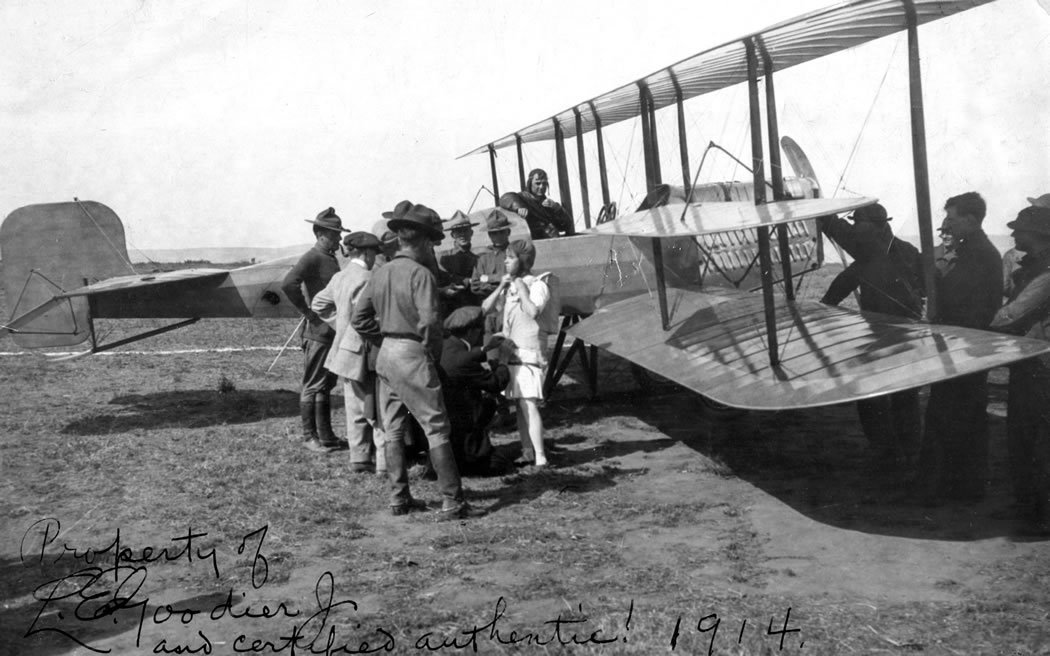
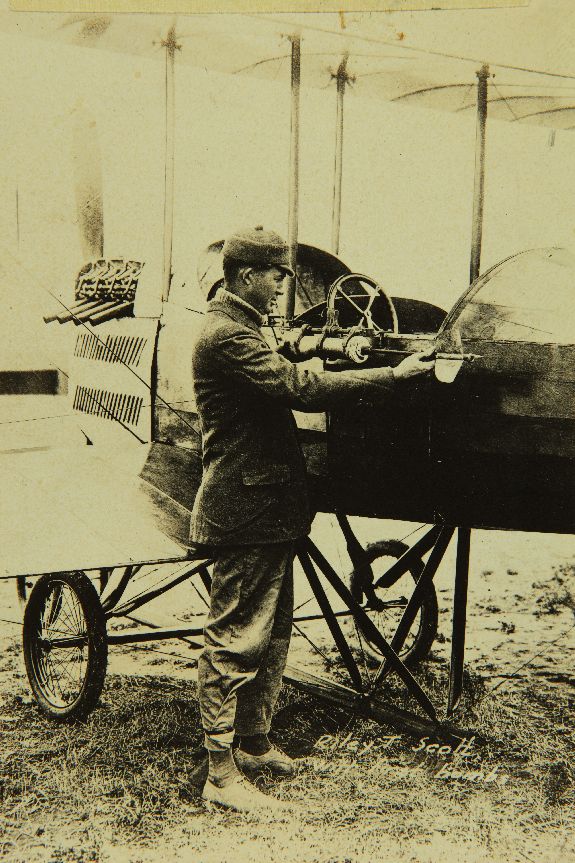
August 17 —
Capt. Lewis E. Goodier Jr.
tests a bomb-dropping device designed by Lt. Riley
Scott in a Martin Model T at the Signal Corps
Aviation School at North Island, California.
August 30 — Paris,
France is bombed by the Germans. It is the first time a capital city
comes under attack from the air.
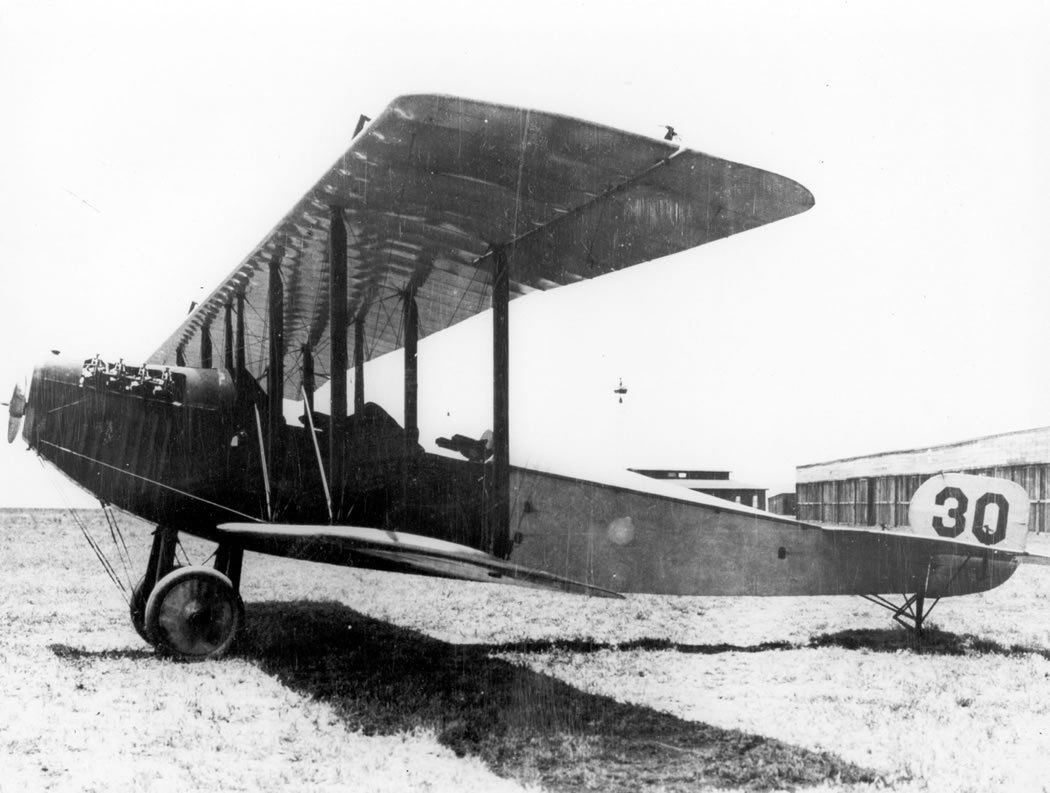
September — Glenn
Curtiss and B. Douglas Thomas rework the Model J to produce the
Curtiss Model N. It just squeaks by a military review board, barely
meeting the Army's new qualifications. Curtiss and Thomas later refine the design
to create the capable Curtiss Model JN or "Jenny."
September 24 —
Royal Flying Corps pilots use both aerial photography and wireless
telegraphy to direct artillery fire during the Battle of the Aisne in
France. Their aircraft carry 75-pound Morse-code transmitters.
October 5 — French Corp. Louis Quenalt, an observer flying
in a Voisin piloted by Sgt. Joseph Frantz, shoots down a German
Aviatik with a Hotchkiss machine gun. This is the first air-to-air kill.
October 31 —
Lt. Francis H. Humphreys of the Royal Flying Corps carries out
the first recorded strafing attack, firing 250 rounds at a
German convoy.
|
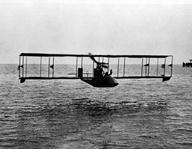
The Benoist XIV on one of its many runs across Tampa Bay in
Florida. It rarely flew more than a few dozen feet above the
water.
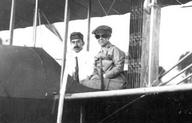
Although Orville Wright (seated next to his sister
Katharine) won the patent suit, he didn't capitalize on it. Instead of creating a "patent
monopoly" as his investors pushed him to do, he simply licensed other manufacturers to use the
Wright patent.

The Martin T was the first of the "second generation"
aircraft flown by the U.S. military.

The Curtiss Model J was briefly the fastest airplane in
America at 87 mph (140 kph).
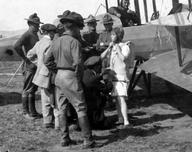
Georgia "Tiny" Broadwick preparing for a jump with a
parachute pack on her back.
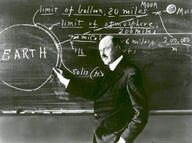
Robert Goddard demonstrating how to get from the earth to
the moon via rocket.
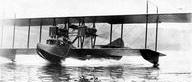
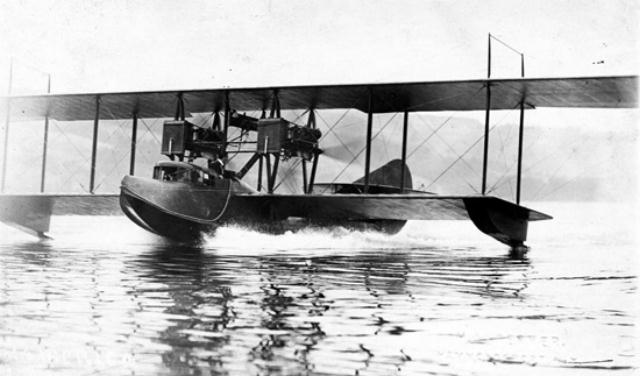
The America takes
off on its maiden flight.
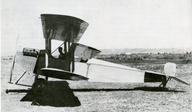
The Curtiss Model N, although it met military specs, was
tail-heavy and slow.
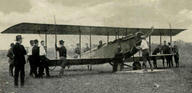
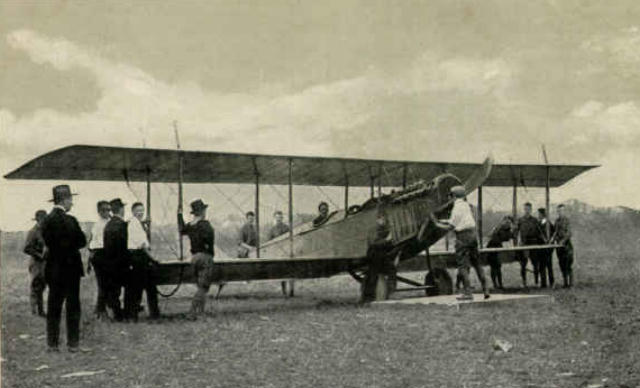
Curtiss and Thomas reworked the N design to create the "JN."
This became the first in a successful series of military
trainers and reconnaissance aircraft.

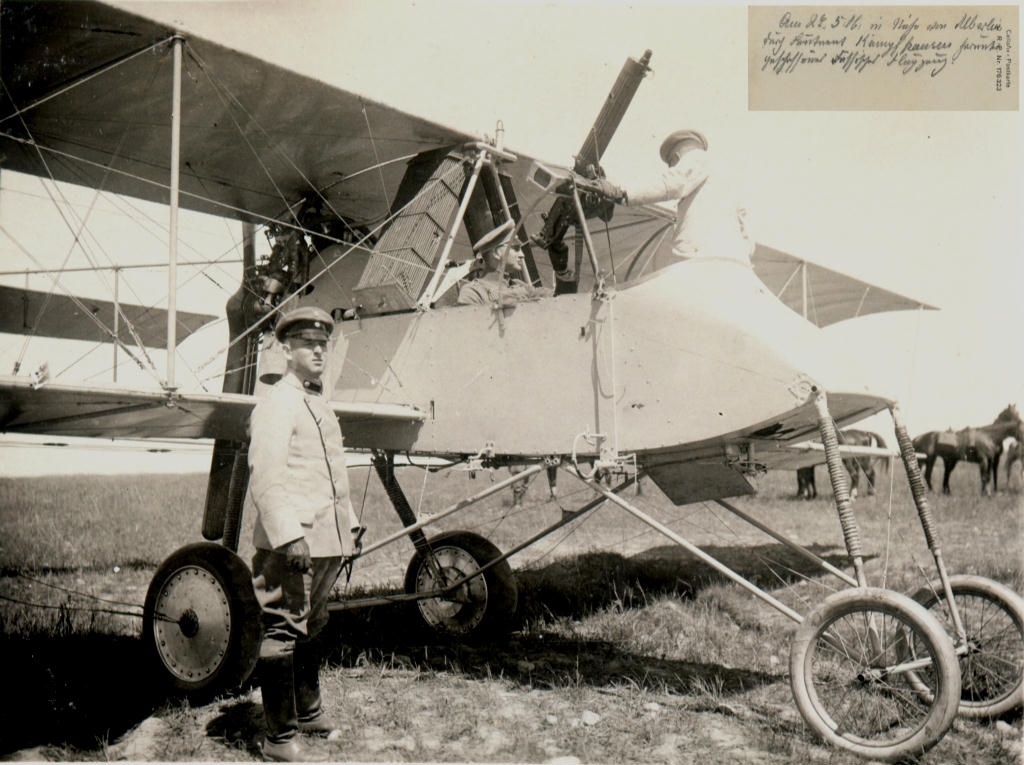
The first airplane to shoot down another was the Voison III.
|
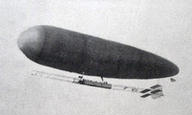
A few months before the St. Petersburg/Tampa airline began,
Roy Knabenshue was taking passengers on scheduled flights in
the White City
airship to see Pasadena, California. Although it did not use
airplanes, this was the first U.S. airline.
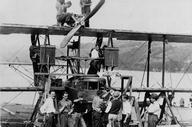
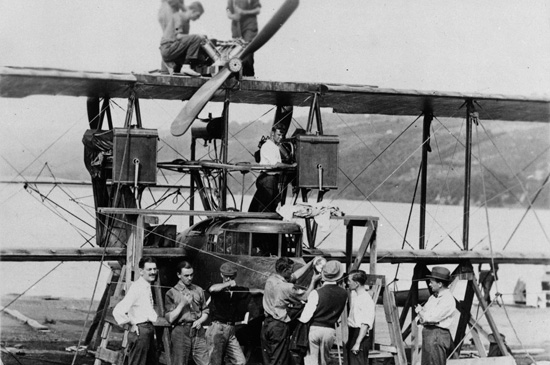
The Curtiss America under construction on Lake Keuka near
Hammondsport, New York. The engine on the top wing was later
eliminated.
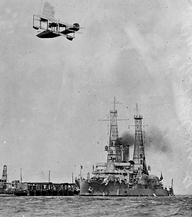
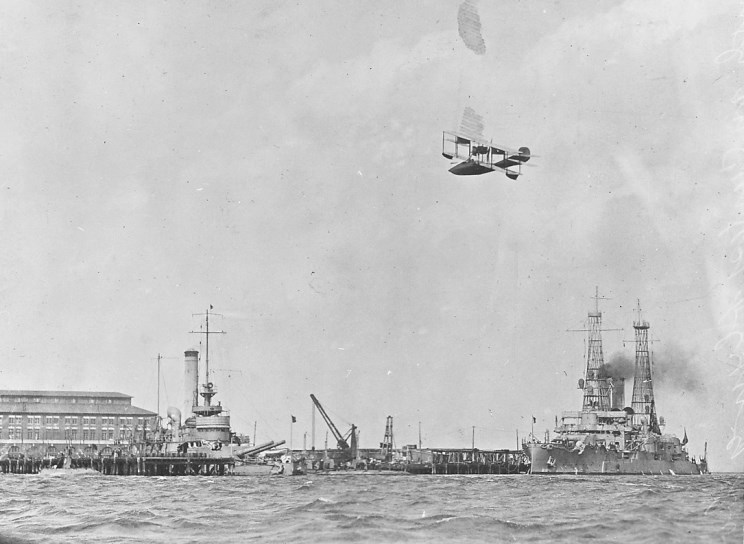
The USS Mississippi (B-23) carried three Curtiss C-2 flying
boats. The airplanes launched from a ramp at the stern of
the ship and were retrieved by a crane.
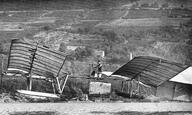
The modified 1903 Langely Aerodrome in flight above Lake
Keuka in New York.
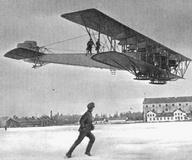
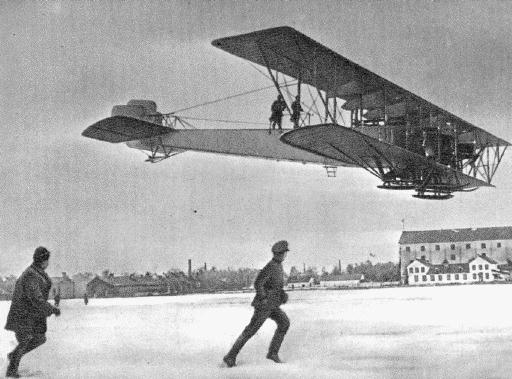
The Ilya Muromets
makes a low pass with passengers standing on the observation
deck.

Sperry ventures onto the wing of a Curtiss flying boat
outfitted with his automatic stabilizer. Pilot Cachin would
soon join him.
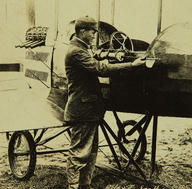
Riley Scott loads practice bombs onto a Martin T aircraft at
North Island.
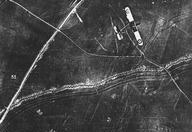
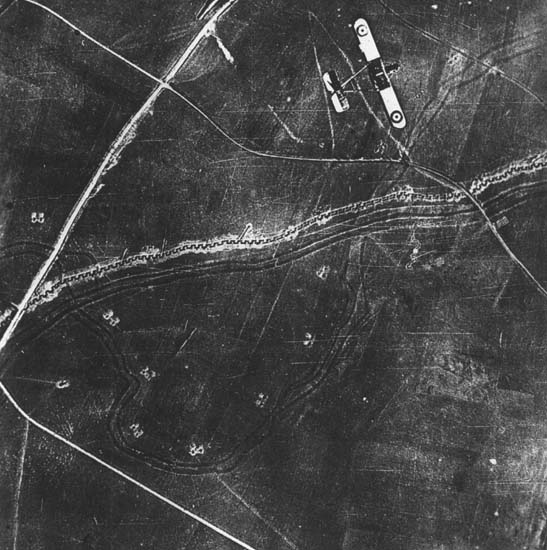
Aerial view of a Royal Flying Corps aircraft over the
trenches in France during World War I.
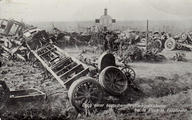
A convoy of German trucks destroyed by aerial strafing and
bombing.
|
|
|
|
|